REVIEW · CORDOBA
Cordoba Mosque-Cathedral: Skip-the-Line Guided Tour
Book on GetYourGuide →Operated by ARTENCORDOBA · Bookable on GetYourGuide
One building, three eras, nonstop clues. This skip-the-line tour is built for people who want the Mosque-Cathedral of Cordoba to make sense fast, with an art historian explaining how the layers fit together. Guides such as Fatima and Patricia bring the timeline to life, from the Visigoth past to the Reconquista conversion.
I especially like that you don’t just hear dates. You get the why behind the design choices, including the big architectural idea that makes the place feel bigger than it should. It’s history with structure, not a lecture you forget in the souvenir shop.
One consideration: it’s only 1.5 hours, so you’ll need to add your own unhurried time if you want long, quiet wandering beyond the guided route.
In This Review
- Key highlights to pay attention to
- Why skip-the-line matters at Cordoba’s Mosque-Cathedral
- Entering the Mosque-Cathedral’s layered timeline in order
- Abd al-Rahman I: how the first mosque aimed high
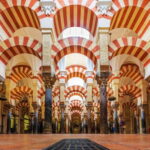
- The double arches: the engineering detail that changes everything
- Almanzor’s extensions: the building grows, and so does its personality
- From mosque to cathedral: Fernando III and the Reconquista in context
- What you’ll actually do during the 90 minutes
- The guides are the product here
- Crowds, protocols, and how to get the best experience
- Price and value: is $35 worth it?
- Who this tour suits best
- Quick practical notes before you go
- Should you book the Cordoba Mosque-Cathedral skip-the-line guide?
- FAQ
- FAQ
- How long is the Mosque-Cathedral guided tour?
- What does the $35 price include?
- Is this tour really skip-the-line?
- Which languages are available for the live guide?
- What meeting point should I use?
- Is hotel pickup included?
- Is the experience wheelchair accessible?
- What is the cancellation policy?
Key highlights to pay attention to
- Skip-the-line entry that helps you start seeing sooner, even with crowds
- Art historian guide framing the monument in clear construction stages
- Abd al-Rahman I’s original mosque explained as a bold statement aimed at rivaling the East
- Double arches tied to height and engineering choices for their time
- Almanzor’s expansions and how they change the building’s rhythm
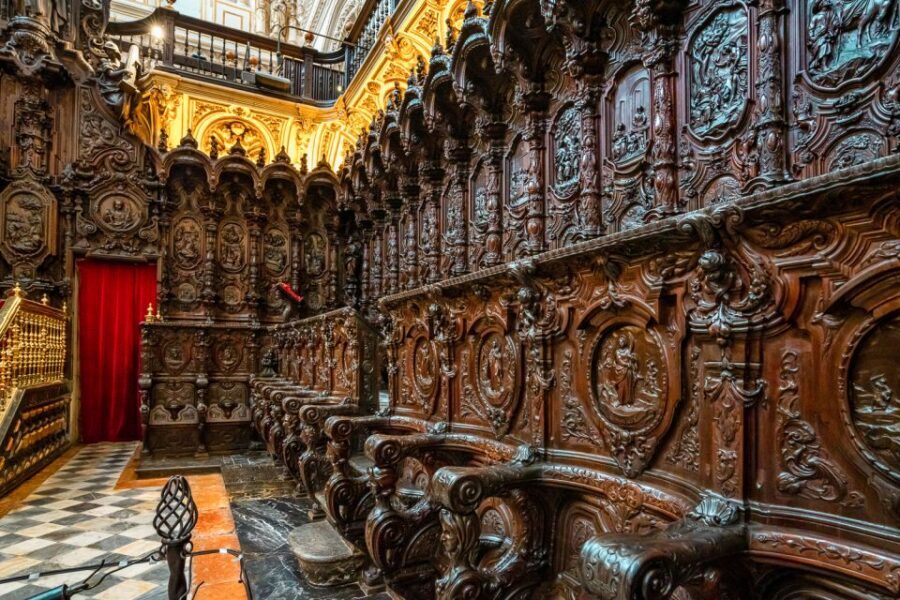
- Fernando III’s cathedral conversion placed in context, with respectful attention to the Islamic design
Why skip-the-line matters at Cordoba’s Mosque-Cathedral
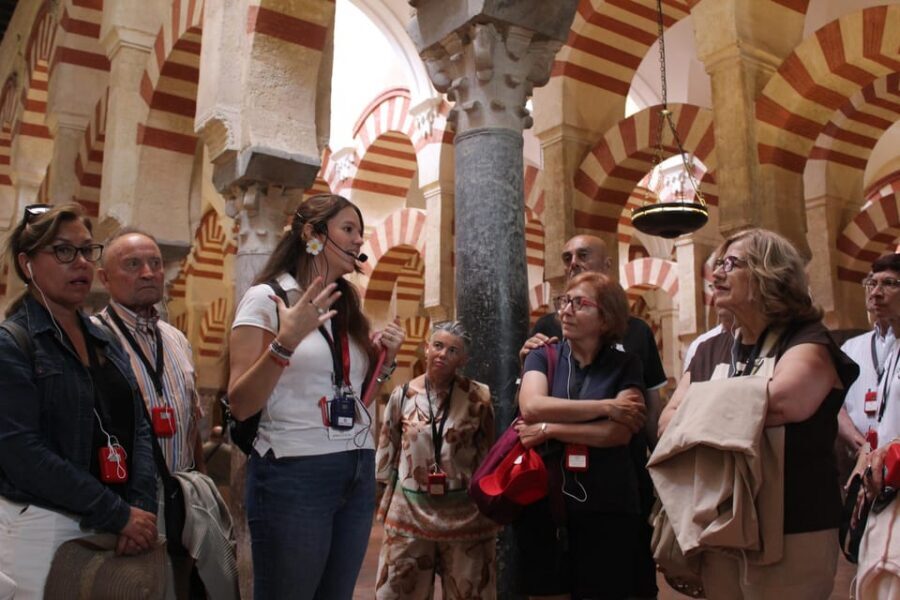
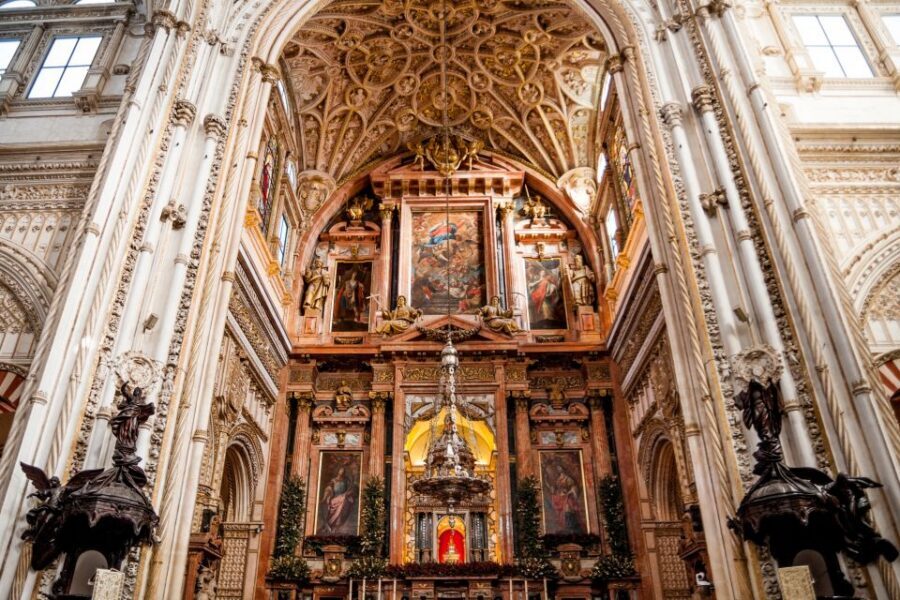
Cordoba’s Mosque-Cathedral is one of those places where the building overwhelms you in a good way. The problem is that sheer scale can make a self-guided visit feel like you’re looking at patterns without knowing what mattered first.
This tour helps you get oriented quickly. You’re not stuck standing around trying to connect the Visigoth layer, the Umayyad expansion, and the later Christian conversion. Instead, the guide gives you a mental map so the different parts stop looking random.
And because it’s a guided tour with a live person, you also get real-time answers. That matters here, because questions come up naturally: Why do the arches look like that? How did the building grow over time? What changed when it became a cathedral?
Other Mosque-Cathedral tours we've reviewed in Cordoba
Entering the Mosque-Cathedral’s layered timeline in order
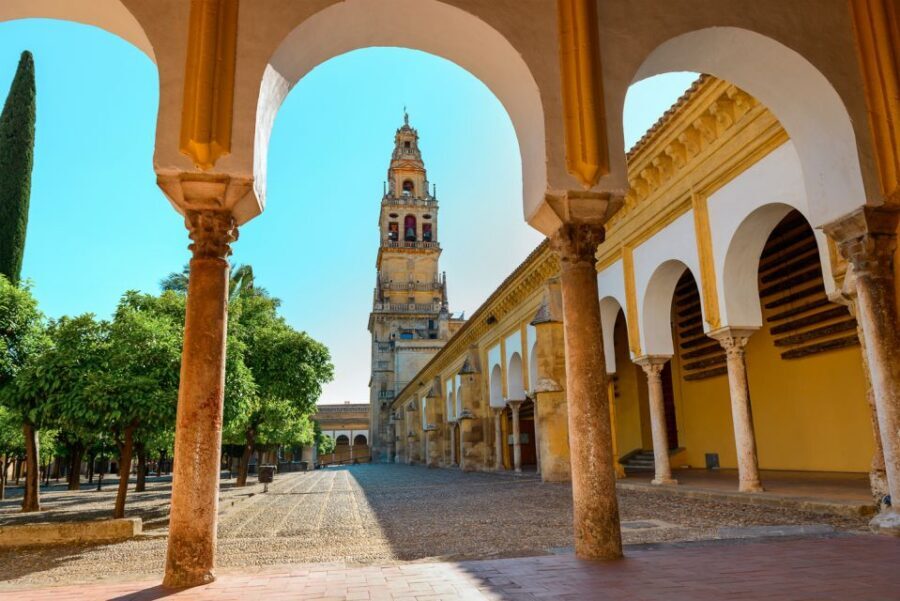
The Mosque-Cathedral isn’t one building with one purpose. It’s a sequence of building campaigns stacked on top of each other, each era leaving visible fingerprints.
You start with the earlier foundation: the old Basilica of San Vicente, built during the Spanish Visigoth empire. From there, the story moves into the moment Abd al-Rahman I sets the tone with a primitive mosque designed to rival the great mosques of the East.
That order is the secret. When you understand that each phase was responding to the previous one—stylistically, politically, and spiritually—the “mix” you see on your first glance becomes meaningful instead of confusing.
Abd al-Rahman I: how the first mosque aimed high
A lot of visitors know the Mosque-Cathedral by its nickname, La Mezquita, but the deeper payoff comes when you understand the ambition behind the first phase.
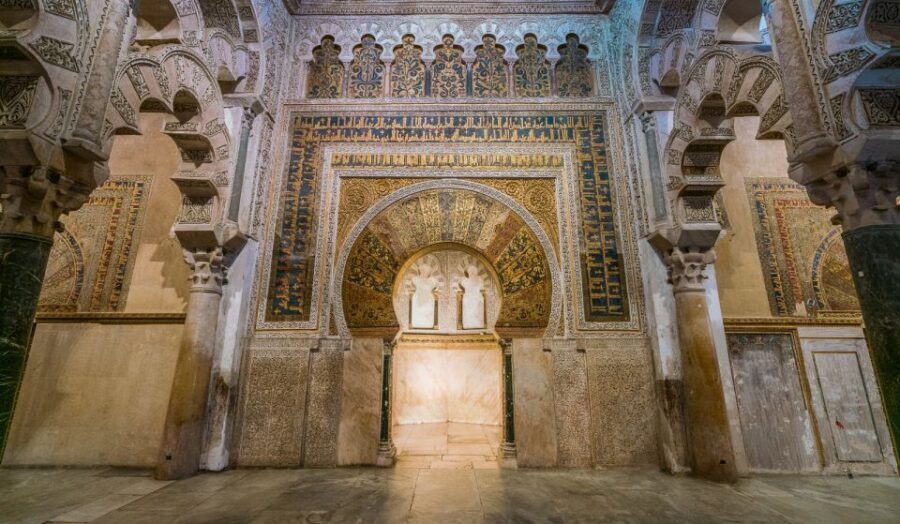
The tour explains Abd al-Rahman I as Cordoba’s 8th-century caliph and connects him to the creation of a mosque meant to be impressive on a regional scale. You’re not just hearing that it was built; you’re being guided through how it was built to compete with the best—especially the “great mosques of the East” the era looked up to.
What I like about this approach is that it gives you a reason to look harder. Instead of staring at details as decoration, you learn to treat them as decisions: what the builders wanted to project, and how architectural form communicates power.
The double arches: the engineering detail that changes everything
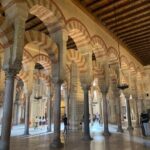
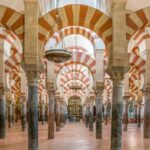
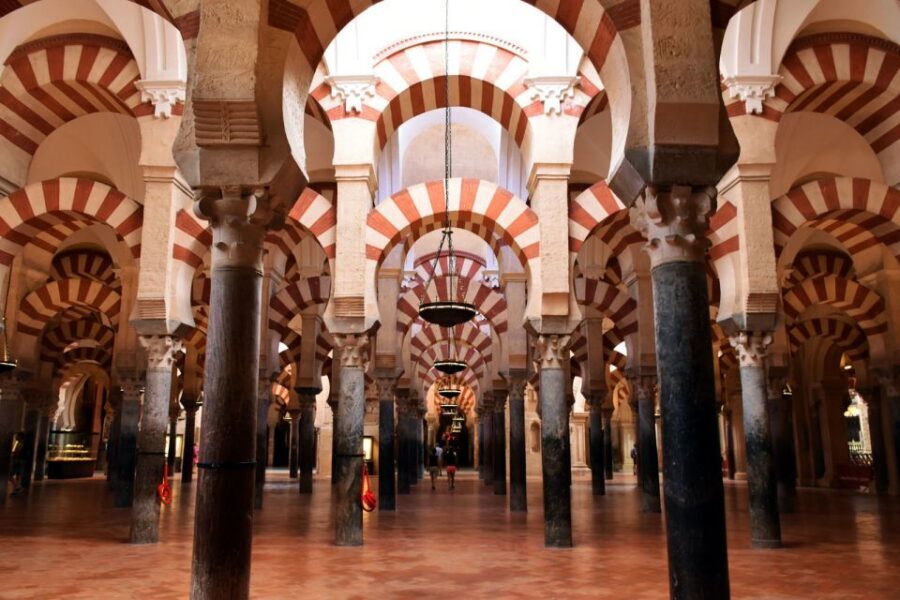
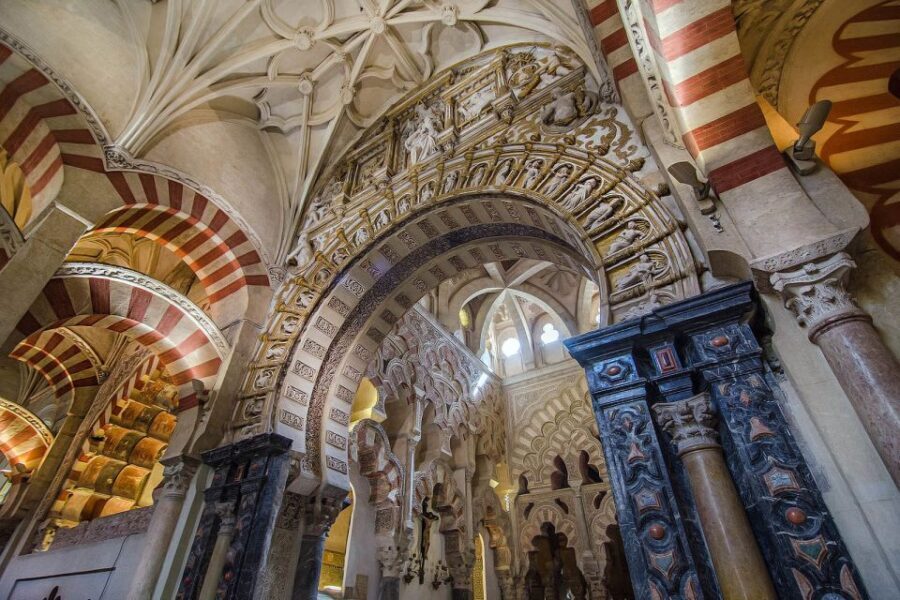
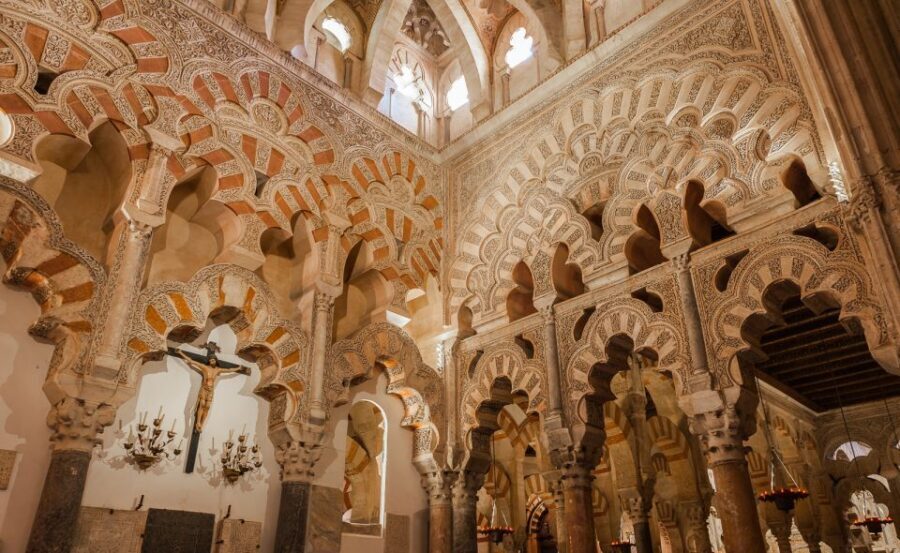
One of the most talked-about architectural ideas on this tour is the double arches. The guide uses them as a practical lens for understanding how height and proportion were achieved.
Even if you’re not an architecture person, your eyes will catch the pattern. The double-arch system is described as revolutionary for its time—basically, a way to give the interior a sense of scale and rhythm that pushes beyond what you’d expect.
This is where a guided approach pays off. Self-guiding can make you admire the visual effect without knowing the logic. With a guide, you learn what to look for and why it mattered to the people who built it.
Almanzor’s extensions: the building grows, and so does its personality
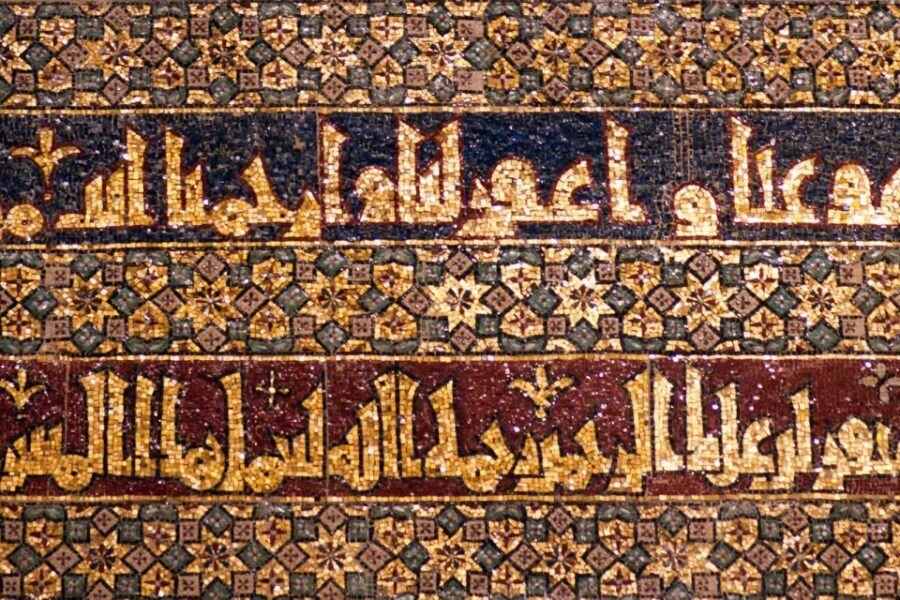
Cordoba’s Mosque-Cathedral didn’t stop after the first major construction. The tour carries you forward through successive extensions, including the time of Almanzor, described as a ruler of Muslim Iberia under the Umayyad Caliphate of Cordoba.
You’ll get the sense that the building becomes a living project. Each new phase adds weight to the visual language you’re seeing, so it feels less like a static monument and more like a story that keeps writing itself.
If you’re the type who likes to travel with questions—How did it change? Who controlled it then? Why did the design evolve?—this is the part that will keep you alert. The guide ties the changes back to the broader timeline instead of treating them as isolated style shifts.
Other guided tours in Cordoba
From mosque to cathedral: Fernando III and the Reconquista in context
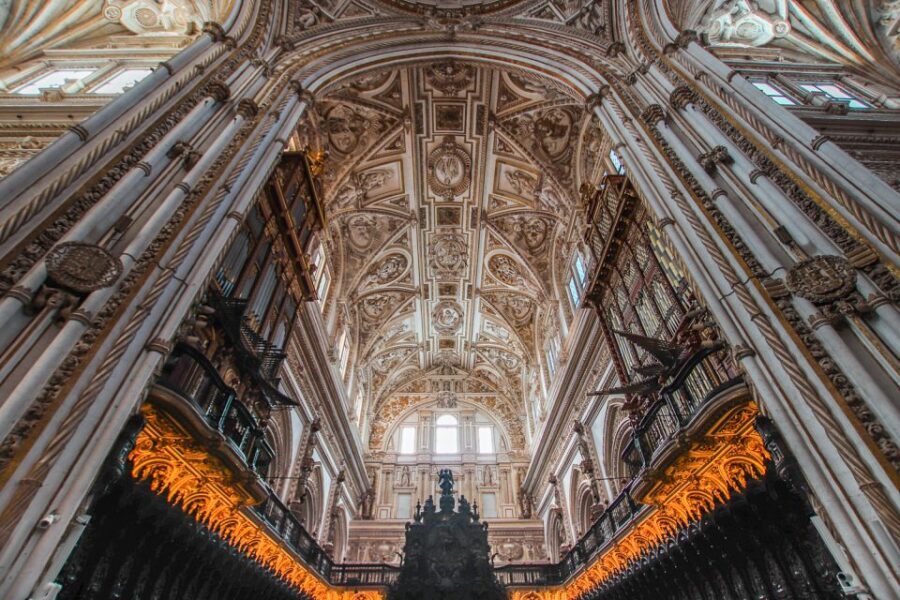
The tour doesn’t dodge the political and religious shift. You learn about the Reconquista of Cordoba by the Christian armies of Fernando III, when the mosque was converted into a cathedral.
This matters because the Mosque-Cathedral is a rare monument where multiple cultures share physical space. A respectful explanation helps you notice both continuity and disruption: what was kept, what was altered, and how the building’s meaning changed.
One practical benefit: the guide helps you understand the impact without turning it into a shouting match. You’re given clear framing so you can view the architectural changes with eyes that see cause-and-effect.
What you’ll actually do during the 90 minutes
Even without getting overly specific about an exact minute-by-minute script, you can expect the flow to follow the monument’s construction story. The guide walks you from the earliest referenced layer (San Vicente) to Abd al-Rahman I’s mosque, then through later expansions including Almanzor, and finally to the conversion under Fernando III.
Along the way, you’ll pause at key visual moments connected to what the guide is explaining. The double arches are one of the central anchors, used to connect engineering and meaning.
Many guides also leave breathing room at the end. On at least one outing, people noted about 15 minutes of free time inside near the end, which is a smart feature. It gives you a chance to look again with your new mental map.
The guides are the product here
This tour is priced like a guided experience, and it lives or dies by the guide.
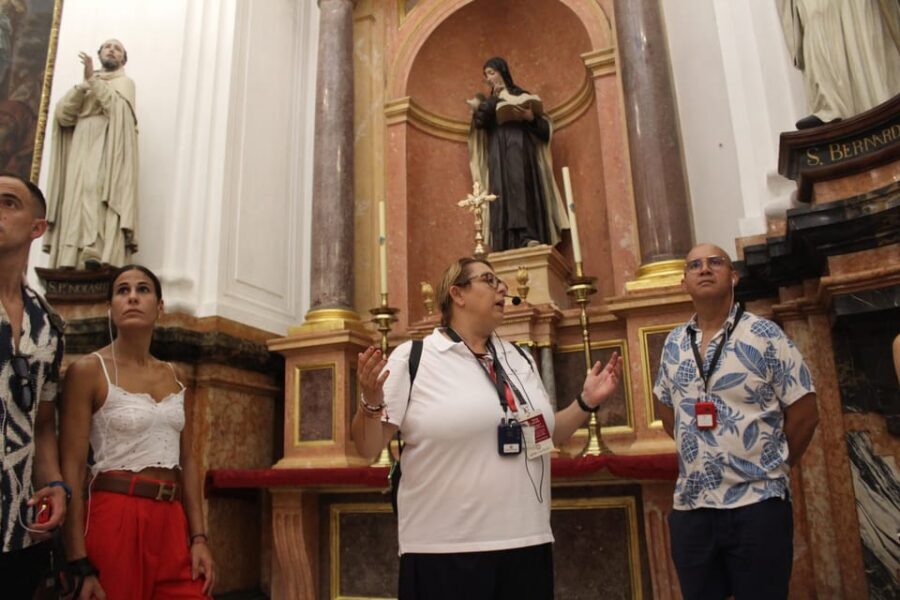
The most praised element in the guides you’ll likely meet is their ability to make the building understandable through clear storytelling. People specifically highlighted guides like Fatima, Patricia, Maria, Saray, and Ana for doing more than naming facts. They explain the timeline and the transitions so you can follow what you’re seeing.
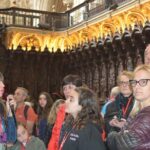
Another standout theme: pacing. Even when there are crowds, the guide keeps the group together and keeps the explanations moving. You don’t end up wandering off with half the story.
A related bonus is respect and clarity around the Islamic design. Some guides are direct about the Christian conversion, but they also maintain an appropriate tone toward the original engineering and art. That balance makes it easier for you to enjoy the monument rather than argue with your own interpretation.
Crowds, protocols, and how to get the best experience
The Mosque-Cathedral is famous for a reason, and that usually means lines and busy entrances. The skip-the-line setup helps you spend more of your 90 minutes looking at the building instead of waiting to start.
Once you’re inside, it’s also helpful to follow the guide’s lead on how to move and where to focus. One guide (Ana) was noted for knowing the quirks of the on-site protocols, which is exactly what you want on a monument with layers and rules.
Here’s a simple mindset that helps: treat the tour like a guided reading. If you keep your attention on the story being told, the visuals become easier to decode. If you wander off chasing photos, you’ll feel the time shrink.
Price and value: is $35 worth it?
At $35 per person for 1.5 hours, you’re paying for three things: an art historian guide, a guided experience, and an included entry ticket.
Is it worth it compared to going alone? For me, yes—because this building’s power is in its evolution. Without a guide, you can still admire the architecture, but you’ll miss the connective tissue: how Abd al-Rahman I’s vision aimed outward, how later rulers like Almanzor shaped what you see, and what Fernando III’s conversion did to the meaning of the space.
If you’re the kind of traveler who wants to understand at least the big “how and why,” a guided tour is a fast shortcut. And if you only have a short window in Cordoba, this is one of the more efficient uses of limited time.
Who this tour suits best
This tour is ideal if you:
- Want a structured explanation of construction stages instead of a free-for-all walk
- Like architecture when it’s tied to human decisions—politics, ambition, and religion
- Prefer a clear timeline you can recall later, not scattered observations
It might not be ideal if you:
- Want a long, slow, self-guided visit where you can pause for as long as you like at every corner
- Are only interested in a quick photo stop and don’t care about the story behind the details
Quick practical notes before you go
This activity lists live tour guide support in English, French, and Spanish. It’s wheelchair accessible, and entry tickets are included in the price. Hotel pickup and drop-off are not included, so you’ll need to get yourself to the meeting point—one detail that can vary depending on the option you book.
If you want flexibility, the listing offers free cancellation up to 24 hours in advance and a reserve-now, pay-later option.
Should you book the Cordoba Mosque-Cathedral skip-the-line guide?
Yes, if you want your visit to be more than a beautiful walk. Book it if you care about understanding how the Mosque-Cathedral changed—first under Abd al-Rahman I, then through expansions like those associated with Almanzor, and finally through Fernando III’s conversion.
Also book it if your time in Cordoba is tight. Ninety minutes with a strong guide is enough to leave with a real mental map, and that makes the later self-exploration (if you add extra time) far more satisfying.
FAQ
FAQ
How long is the Mosque-Cathedral guided tour?
The tour lasts 1.5 hours.
What does the $35 price include?
It includes an art historian guide, the guided tour, and an entry ticket to the Mosque-Cathedral of Cordoba.
Is this tour really skip-the-line?
Yes, the experience is labeled as a skip-the-line guided tour.
Which languages are available for the live guide?
The live tour guide is available in English, French, and Spanish.
What meeting point should I use?
The meeting point may vary depending on the option booked.
Is hotel pickup included?
No, hotel pickup and drop-off are not included.
Is the experience wheelchair accessible?
Yes, it is listed as wheelchair accessible.
What is the cancellation policy?
Free cancellation is available up to 24 hours in advance for a full refund.