REVIEW · CORDOBA
Cordoba: Jewish Quarter and Mosque-Cathedral Guided Tour
Book on GetYourGuide →Operated by Konexion Tours · Bookable on GetYourGuide
Mosques and synagogues, same morning.
This Cordoba Jewish Quarter and Mosque-Cathedral guided tour threads together the city’s Islamic and Jewish past with the Christian layers you see at the Mezquita-Cathedral. I really like the way the audio receivers help you focus once you’re inside the big monument, and I like the guided stroll through the Judería side streets where the details can be easy to miss on your own. One watch-out: the Córdoba Synagogue can be closed on Mondays, Sundays, and during festivities, so your plan may shift on the day you go.
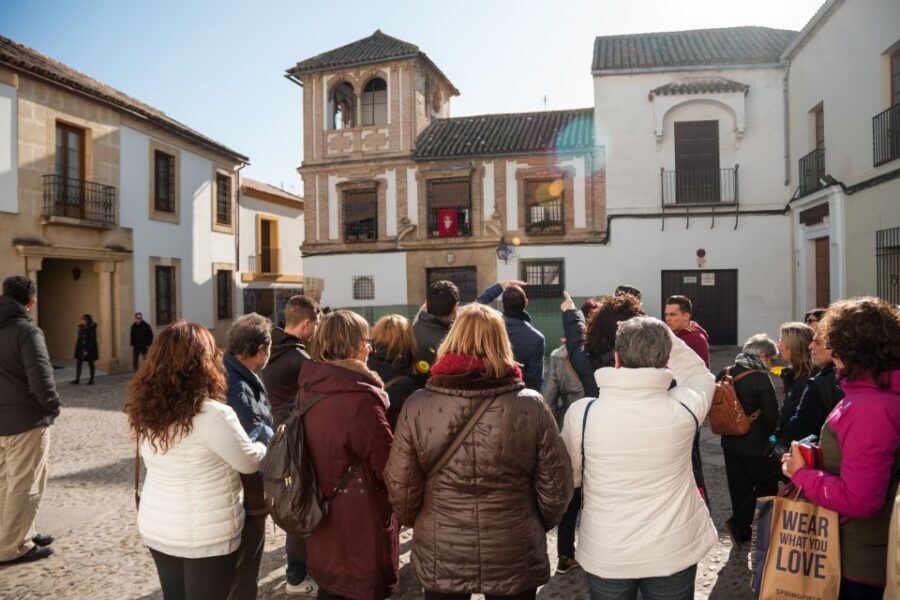
The tour runs about 2 hours and starts near the historic center (either Plaza Campo Santo de los Mártires or the Monument to the Lovers area). You’ll walk, stop often for context, and then spend a full chunk of time inside the Mezquita-Cathedral, where architectural styles pile on top of each other over centuries.
Most people should feel it’s good value: you’re paying for a live guide plus entrance fees and skip the ticket line, which matters because the Mosque-Cathedral area can eat your time if you show up without a plan. The only other practical snag is simple: don’t bring luggage or large bags, and wear shoes that can handle old-stone streets.
In This Review
- Quick hits
- Where to Start in Cordoba: Monumento a los Enamorados vs. Plaza Campo Santo
- Córdoba Synagogue Visit: Mudejar Doorwork and Psalm Inscriptions
- The Judería de Córdoba Stroll: Narrow Streets That Make the Past Feel Close
- The Mezquita-Cathedral Arrival: Inside Nine Centuries of Cordoba
- How a Cathedral Was Built Inside a Mosque (and Why It Feels Strange)
- Pace, Group Size, and the Real Role of the Guide
- Skip the Ticket Line for the Mezquita-Cathedral
- Price vs. Value: Is $45 for 2 Hours Fair?
- Who This Tour Fits Best (and Who Might Want Something Else)
- After the Tour: Turning History Into Tapas (Without Guesswork)
- Should You Book This Cordoba Jewish Quarter and Mosque-Cathedral Tour?
- FAQ
- Is the synagogue stop included every day?
- How long is the tour, and is it mostly walking?
- What languages are the guides?
- Are entrance fees and the guide included?
- Can I bring luggage or large bags?
- What should I bring for the tour?
Quick hits
- Audio receivers inside the Mezquita-Cathedral so you can actually hear the guide over the crowds
- Jewish Quarter (Judería) street walk with frequent picture-and-story stops
- Córdoba Synagogue detail-focused visit (when open), including Mudejar plasterwork
- Skip-the-ticket-line entry plus entrance fees handled for you
- A firm 2-hour structure that still leaves time to look closely at what you came for
Where to Start in Cordoba: Monumento a los Enamorados vs. Plaza Campo Santo
This tour begins in Cordoba’s old core, and you’ll pick one of two starting points when you book: Plaza Campo Santo de los Mártires or the Monumento a los Enamorados area. Either one puts you close enough to get moving fast, which is a big deal in Cordoba because you’ll spend more time walking than you might expect.
Bring passport or an ID card and plan on comfortable shoes. Also, keep your hands free: the tour doesn’t allow luggage or large bags, which is sensible for a walking route through tight streets.
If you’re trying to coordinate a day of sightseeing, the biggest timing factor is the order of the stops: you’ll start with the Jewish-related sites and then end at the Mezquita-Cathedral for the heavy-hitter interior experience. That ending matters because once you’re inside, you’ll want to take your time with columns and arches instead of feeling rushed.
Other Mosque-Cathedral tours we've reviewed in Cordoba
Córdoba Synagogue Visit: Mudejar Doorwork and Psalm Inscriptions
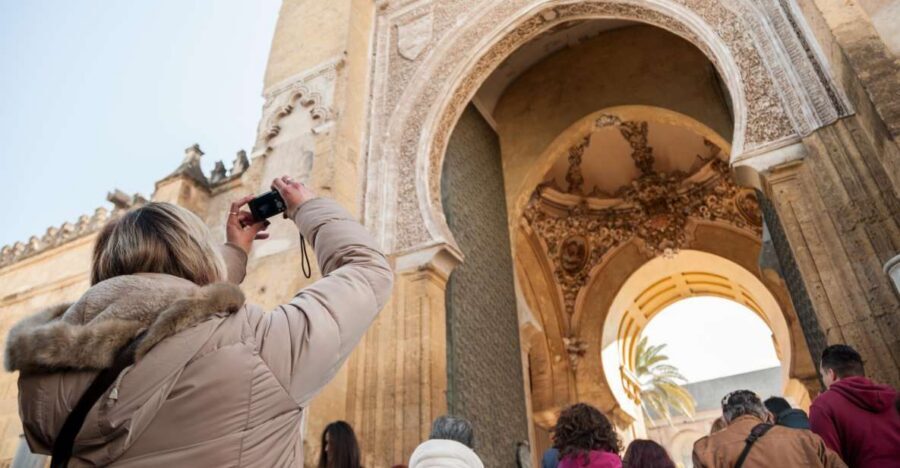
One of the best reasons to choose this tour is the chance to see the Córdoba Synagogue during your walk around the historic Jewish area. It’s not always open, though. According to the tour details, the synagogue is available except on Mondays, Sundays, and during festivities—so if your travel dates land on one of those days, don’t assume you’ll step inside.
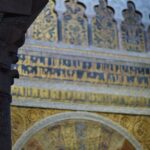
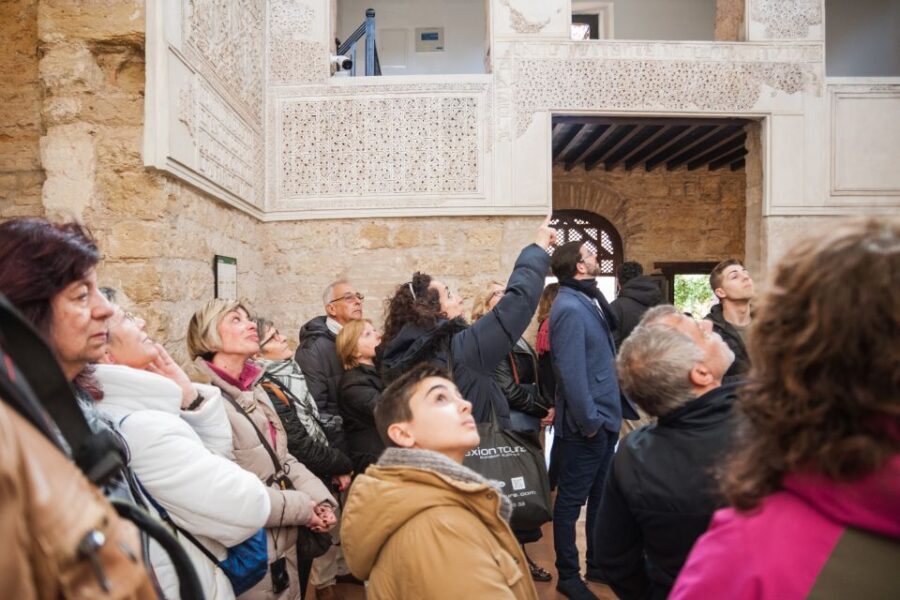
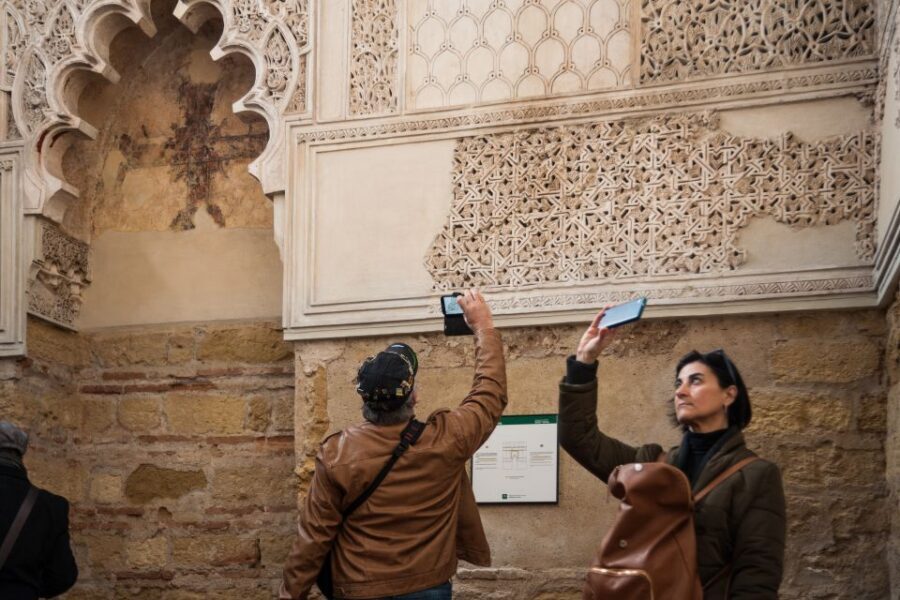
When it is open, the visit is short but detailed (about 10 minutes with a guide). The standout moment is the main door, decorated with Mudejar plasterwork. Even in a quick stop, the guide can point out the design logic and why those decorative elements mattered in the space.
Another specific feature to look for is the trefoil archway formed by three small balconies, with inscriptions from the psalms. It’s the kind of thing that’s hard to spot on your own because your eyes go straight past it when you’re just trying to get a good photo.
The practical upside: this synagogue stop gives you a grounded starting point before you head into the much bigger, louder Mezquita-Cathedral.
The Judería de Córdoba Stroll: Narrow Streets That Make the Past Feel Close
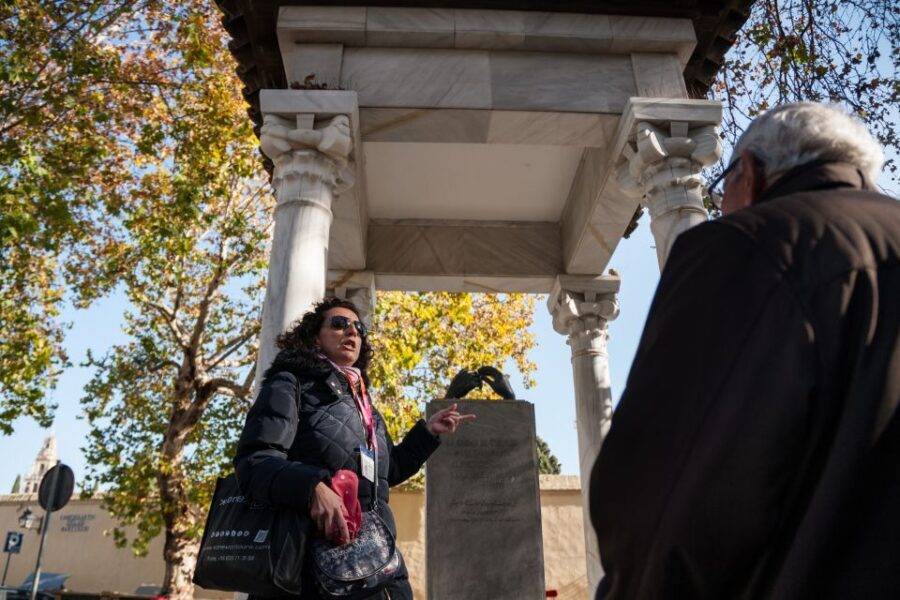
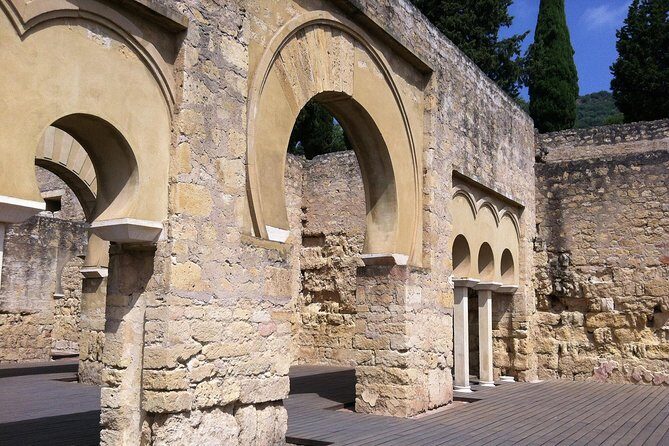
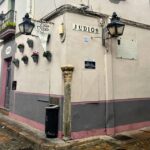
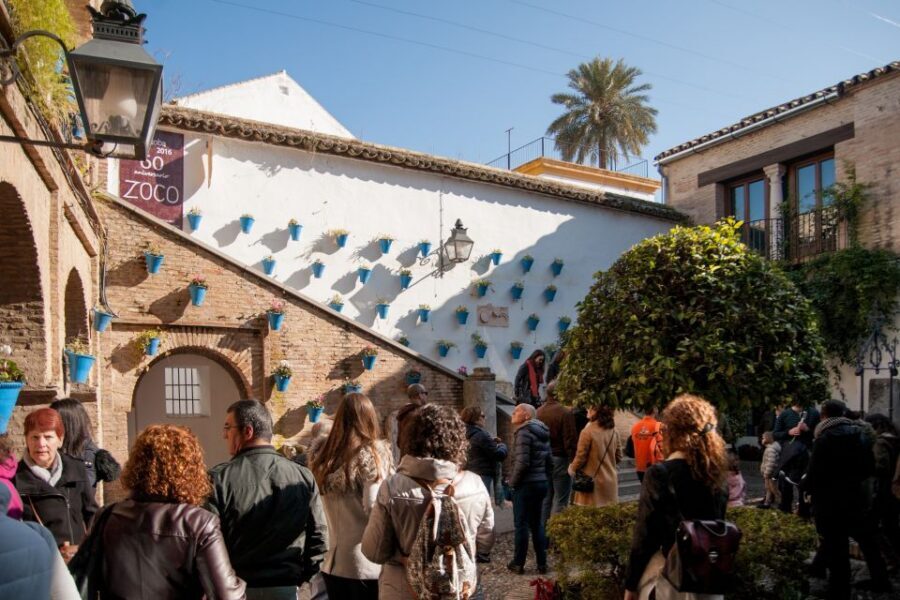
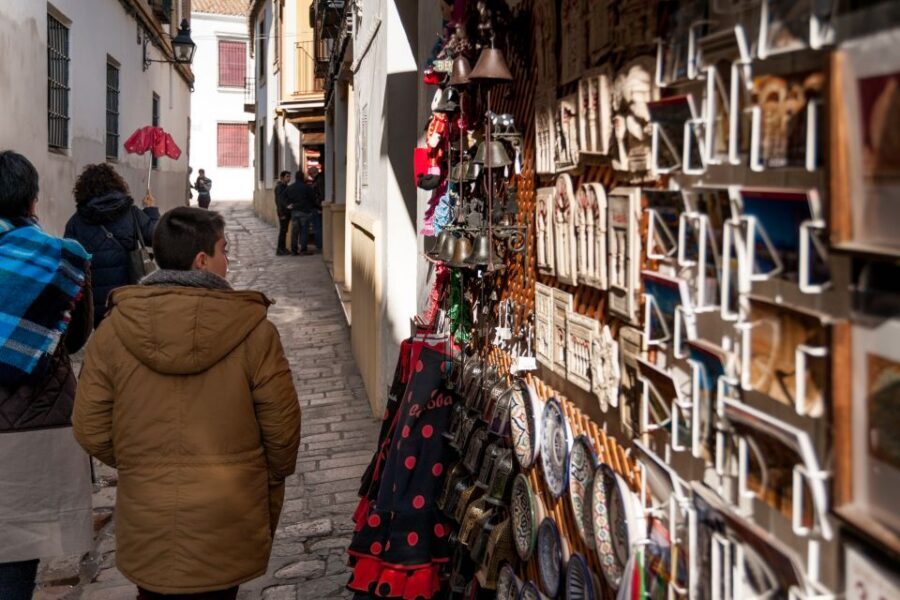
After the synagogue, the tour shifts into the maze of small streets that make up the Judería de Córdoba. This is the part I like for its pacing. You’re not just ticking off sights; you’re being led through the shape of the neighborhood—where corners open to little squares, where buildings feel pressed in, and where history isn’t a museum label on a wall.
You’ll get about 50 minutes of guided walking here. The guide’s job is to connect the street layout to what you’re seeing, so the neighborhood feels like a lived-in space rather than a backdrop for landmarks.
The tour description also notes that you’ll stop at decorative squares and streets to admire the buildings. That’s important because Cordoba’s old quarter doesn’t deliver its best moments in one big view. It delivers them in fragments: doorways, textures, and small urban scenes that reward slow attention.
If you’re the type who tends to speed through old towns, this segment helps you slow down without feeling trapped. And if you do like wandering on your own, you’ll come away with enough orientation to keep exploring after the tour ends.
The Mezquita-Cathedral Arrival: Inside Nine Centuries of Cordoba
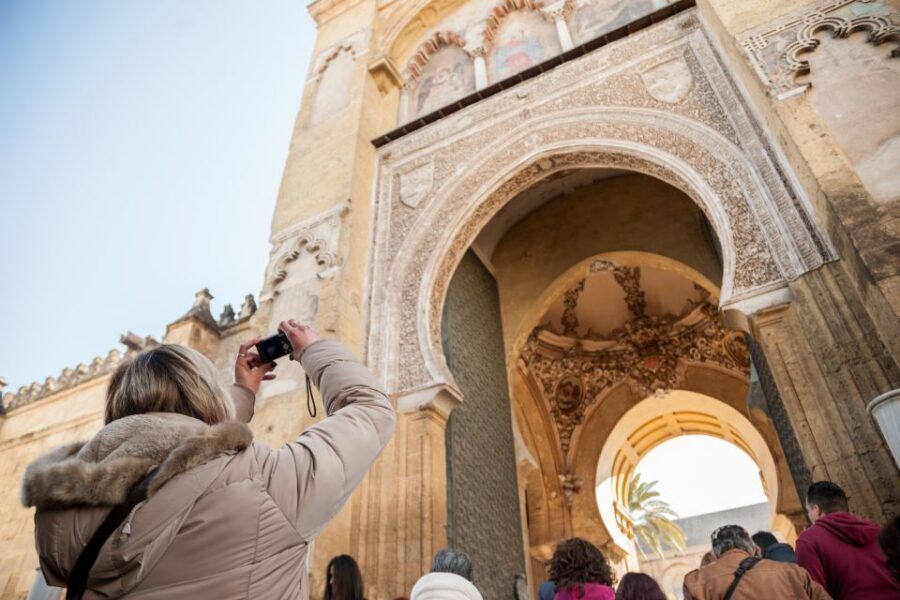
Then you reach the big one: the Mosque-Cathedral of Cordoba. The guided visit is about 1 hour, and the timing works well because it’s long enough for context and close viewing, but not so long that it turns into a lecture marathon.
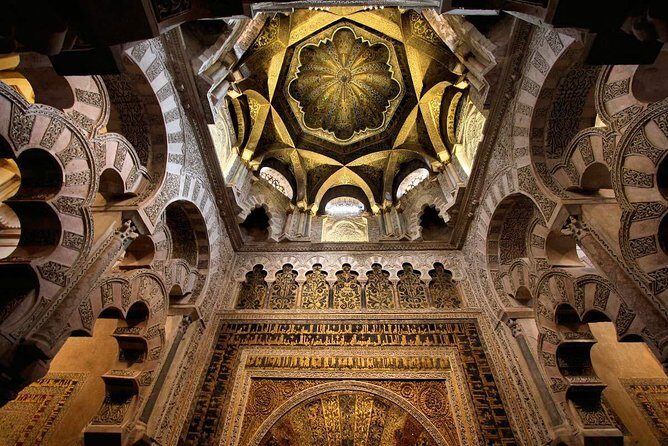
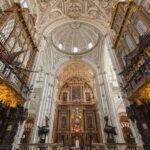
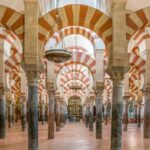
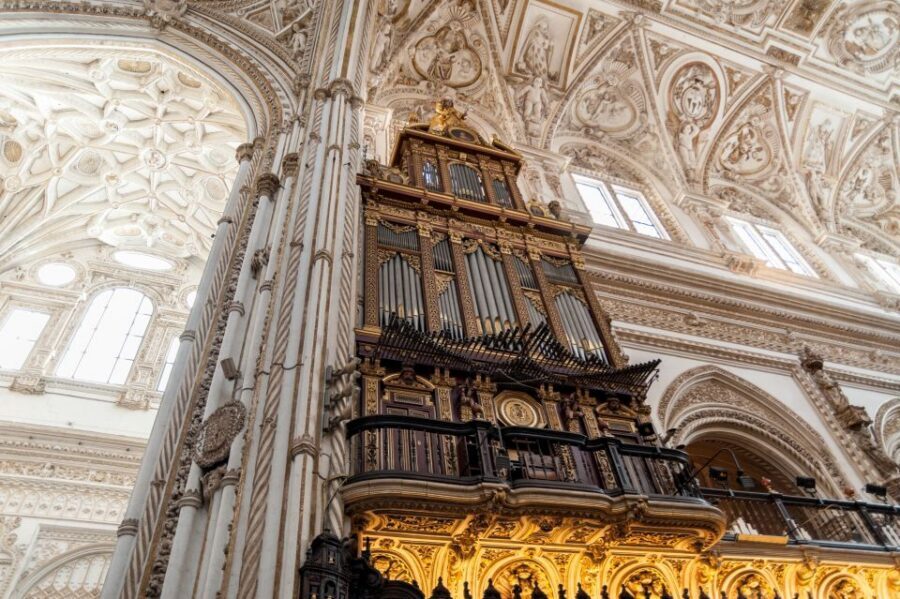
What you’re walking into is not a single-style monument. The tour frames it as an architectural record of nine centuries of Cordoba history, and that’s exactly the effect you get when you look around: layers appear in the materials, the arches, the spacing of columns, and even in the transitions between what feels Islamic and what feels Christian.
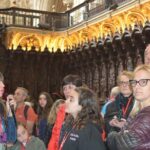
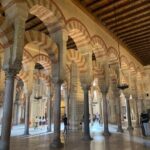
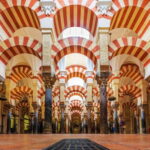
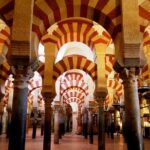
The interior is described as a labyrinth of beautiful columns, double arcades, and horseshoe arches. I like that the guide helps you see that it’s not random decoration. It’s a system of repetition and geometry that creates scale. That scale is hard to appreciate without some guidance, because first-time visitors often focus only on the biggest visual moments.
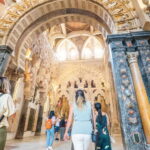
One practical bonus: the tour includes audio receivers, so you can hear your guide inside the Mezquita-Cathedral. That matters because the building can feel echo-y and busy, and you don’t want to miss key points while you’re craning your neck.
How a Cathedral Was Built Inside a Mosque (and Why It Feels Strange)
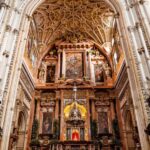
The Mezquita-Cathedral isn’t just famous because it used to be a mosque. It’s famous because it was later converted into a Catholic cathedral after the Christian Conquest—meaning the Christian structure is built inside the Islamic shell.
On this tour, the guide helps you understand that transformation, and it’s one of the most thought-provoking parts of the experience. You’ll see the contrast between the spaces, and you’ll learn how the new religious setting was added without erasing the older architectural language.
A specific detail you’re told to watch for is Byzantine mosaics crafted from marble. Even if you’re not a mosaic expert, knowing what you’re looking at changes how you look. Instead of passing it as just decoration, you can connect it to the idea of reuse and redefinition—different cultures meeting inside one building.
If you’re the sort of visitor who likes “explain it to me” moments, this is where the guide’s role really earns its keep. If you’re more of a pure wanderer, you’ll still benefit because the guide points out visual relationships you might otherwise miss.
Other Jewish Quarter tours we've reviewed in Cordoba
Pace, Group Size, and the Real Role of the Guide
This is a guided walking tour that stays tight and purposeful. Duration is set at 2 hours, and the itinerary moves from synagogue area to the Judería streets and then finishes at the Mezquita-Cathedral.
The group size can make a huge difference in how much you actually get out of the tour. Many of the experience stories highlight guides working with small groups, and that shows up in the tone: guides have time for questions, and they can adjust the pace when people want extra context.
You’ll also get multiple guide languages listed: French, English, and Spanish. One reason this matters is clarity. When you’re inside the Mezquita-Cathedral, you want a guide who can describe what you’re seeing in a way that clicks fast.
Also worth noting: one experience mentioned the tour ran about 40 minutes longer than planned. That doesn’t mean it always will, but it does suggest that some guides slow down when the building demands it. If you have dinner reservations with a hard deadline, keep some buffer in your schedule.
Skip the Ticket Line for the Mezquita-Cathedral
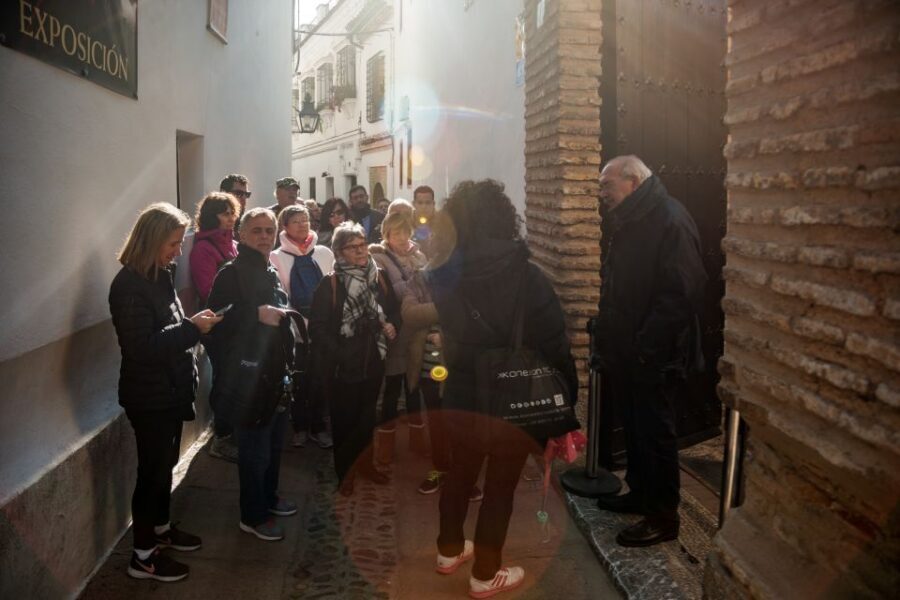
One line in the tour details that can save your whole afternoon: you skip the ticket line, and entrance fees are included. If you’ve ever tried to get into major monuments in peak hours, you know that “just go early” is easier said than done. Here, the tour handles that friction so you spend your time walking and looking.
You do still need to think like a practical traveler:
- Wear shoes you can handle on old stone.
- Keep your bag policy clean (no large bags).
- Bring ID since it’s requested as a requirement.
If your goal is to hit Cordoba’s top sites in a single morning or afternoon block, skipping that ticket bottleneck is a real quality-of-life upgrade.
Price vs. Value: Is $45 for 2 Hours Fair?
At $45 per person for about 2 hours, this tour can feel like a decision point. The honest way to look at value is to break down what you’re actually getting: a live guide, entrance fees, and audio receivers, plus skip-the-ticket-line entry.
If you planned to visit the Mezquita-Cathedral on your own, you’d still want something to make the interior legible—why the arches repeat, what makes the Christian insert different, and where to look so you’re not just wandering under columns. The audio receiver part is also significant because it keeps the guide’s explanations accessible while you’re inside the dense space.
You’re also getting something “group tours” often fail at: the walk through the Judería is a guided route with stop-and-look moments, not a rushed corridor from one photo spot to the next. Even with a set timeline, the structure supports a slower read of the neighborhood.
So yes, it costs money, but it’s not just paying for a signature building. You’re paying for a way to understand what you’re seeing without having to do the research at 10 a.m.
Who This Tour Fits Best (and Who Might Want Something Else)
This tour is ideal if you want a single, efficient way to connect Cordoba’s Jewish Quarter with the Mezquita-Cathedral in one coherent thread. It’s especially good for:
- First-time visitors who want their bearings fast
- People who like architecture explanations with specific visual cues
- Travelers who don’t want to spend time figuring out which details are worth stopping for
It’s also a strong choice for mobility needs compared to self-guided wandering, since the route is set and wheelchair accessible is listed. If mobility is a major concern, wear the best shoes you can and go slow through the street sections.
If your plan is ultra-flexible and you love spending hours alone in one building, you might prefer a less structured approach. But if you want the history to snap into place quickly, this format helps.
After the Tour: Turning History Into Tapas (Without Guesswork)
The tour ends with your guide pointing you toward local restaurants and taverns if you want to try authentic Andalusian tapas. Food isn’t included, but the value here is practical: you leave with a recommendation chain, not just generic advice.
This works well because Cordoba’s best eating tends to happen near where you’re already walking. You’ll already know which neighborhoods you passed through, and you can pick something that matches your energy level after the walking and the standing inside the Mezquita-Cathedral.
Should You Book This Cordoba Jewish Quarter and Mosque-Cathedral Tour?
I’d book this tour if you want a focused, guided connection between the Jewish Quarter streets and the Mezquita-Cathedral’s inside-out history. The combination of audio receivers, skip-the-line entry, and entrance fees included makes the price feel more grounded than many sightseeing add-ons.
Do book it with one expectation check: the synagogue visit depends on the day. If your dates land on a closure day, you’ll still get the neighborhood context and the Mezquita-Cathedral payoff, but you may miss that specific synagogue interior moment.
One more smart move: if you care about a certain guide style, you can look for past guide names when your booking platform shows them. Names like Maria, Paqui, Carmen, Ana, Ángel, and Elena appear repeatedly in positive experiences for energy, humor, and clear historical framing.
If that sounds like your kind of sightseeing, this is a very safe bet for a high-impact two hours in Cordoba.
FAQ
Is the synagogue stop included every day?
No. The Córdoba Synagogue visit is listed as available except on Mondays, Sundays, and during festivities. On those days, your stop order or access may differ.
How long is the tour, and is it mostly walking?
The tour duration is 2 hours. It includes a guided walking segment through the Judería de Córdoba (about 50 minutes) plus time for the synagogue and the Mosque-Cathedral.
What languages are the guides?
The live tour guide is offered in French, English, and Spanish.
Are entrance fees and the guide included?
Yes. Live guide, audio receivers for inside the Mosque-Cathedral, and entrance fees are included. The tour also notes that you skip the ticket line.
Can I bring luggage or large bags?
No. The tour states that luggage or large bags are not allowed.
What should I bring for the tour?
Bring passport or an ID card and wear comfortable shoes for walking.