REVIEW · CORDOBA
Alcazar of Cordoba Small Group Tour with Skip the Line Ticket
Book on Viator →Operated by OWAY Tours · Bookable on Viator
Cordoba’s Alcázar is a time machine with good shoes. This small-group visit takes you through a palace shaped by Visigoth fortifications, the Caliphate era, and the Catholic Kings. You’ll also get the guided context that turns a pretty building into a real story, including the meeting tied to Isabella I, Ferdinand II, and Christopher Columbus.
What I really liked is how the tour balances the “wow” with the “why.” You’ll spend real time with the Patio Morisco Moorish baths and mosaics, and you’ll finish with the gardens and watchtower views that make Córdoba feel like a city you can breathe in. One thing to keep in mind: this tour isn’t always in English, and the site timing can affect access to certain areas like the towers.
In This Review
- Key things to know before you go
- Alcázar de los Reyes Cristianos: why this palace sits on three eras
- Getting in smoothly: skip-the-line tickets and a 15-person group
- Stop 1: the royal palace entrance and the Visigoth-to-Caliphate foundations
- Patio Morisco and Moorish baths: the spaces where water tells a story
- Mosaics and royal rooms: understanding Isabella I and Ferdinand II through details
- Watchtower views and gardens: the part you’ll remember on your way out
- How long it takes and what to expect on-site
- Price check: is $22 good value for the Alcázar of Córdoba?
- Should you book the Alcázar of Córdoba small-group tour?
- FAQ
- How long is the Alcazar of Cordoba small group tour?
- What is included in the $22 ticket?
- Is transportation included?
- How many people are in the group?
- Where do I meet the guide?
- What language is the tour offered in?
- Can I cancel for free?
Key things to know before you go

- Layered history in one monument: Visigoth foundations, later Caliphate occupation, and then royal use by Isabella I and Ferdinand II
- Moorish baths at the Patio Morisco: you’ll see how the palace handled water, cooling, and daily life
- Garden views from the watchtower: the scenery is often the highlight, especially earlier in the day
- Small group size (max 15): easier questions, fewer bottlenecks, and more attention from the guide
- Skip-the-line admission included: you’re not hunting for timed entry on arrival
Alcázar de los Reyes Cristianos: why this palace sits on three eras
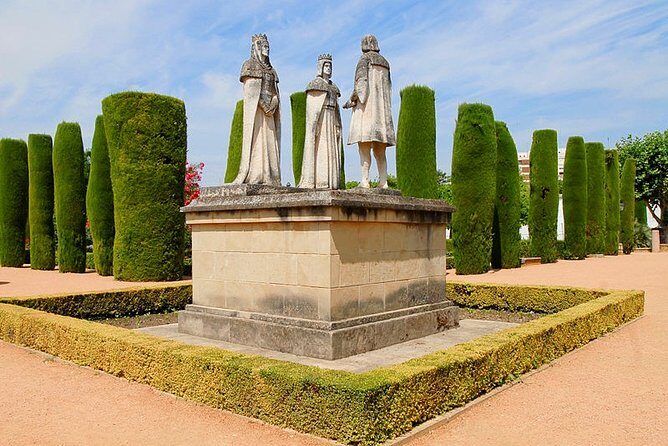
The Alcázar of Córdoba is not just one palace. It’s multiple chapters stacked in the same footprint, which is why the guided approach matters. The story starts with a fortress built by the Visigoths, then the site gets taken over and reshaped during the Caliphate of Córdoba. Later, the royal family of Castile and Aragon—Isabella I of Castile and Ferdinand II of Aragon—made it a primary residence.
A good guide helps you see the building as a timeline you can walk through. Without context, you might admire the details and move on. With context, you start noticing the “handwriting” of each era: where power wanted privacy, where decoration became political, and where practical spaces like baths and courtyards tell you how people lived.
This is also one of those places where the famous names feel more grounded. You’ll hear the stories connected to Isabella and Ferdinand, and the account involving Christopher Columbus. Whether you already know the background or you’re learning it fresh, the point is the same: the Alcázar sits right in the swirl of late-medieval Spanish history.
Other Alcazar tours we've reviewed in Cordoba

Getting in smoothly: skip-the-line tickets and a 15-person group

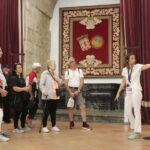
This experience is built for timing. The admission ticket is included, and it’s sold as a small group tour (up to 15 travelers). That matters at Córdoba’s top sights, where queues can eat up your energy and your plan.
Start at OWAY Tours in Plaza del Triunfo (Pl. del Triunfo, s/n). The end point is at the Alcázar entrance area on C. Caballerizas Reales, s/n, Centro. In other words: you won’t be doing a long round trip just to get inside the monument.
One practical tip: ticket redemption can feel confusing if you expect a single simple “scan and go” moment. Plan to spend a minute at the office to confirm your reservation name before you head to the site. You’ll waste less time, and you’ll stress less.
Also, the tour duration is about 1 hour 10 minutes. On the day, it may run a bit shorter depending on pacing and crowd flow, so don’t expect to wander independently through everything for a long time after the tour ends.
Stop 1: the royal palace entrance and the Visigoth-to-Caliphate foundations
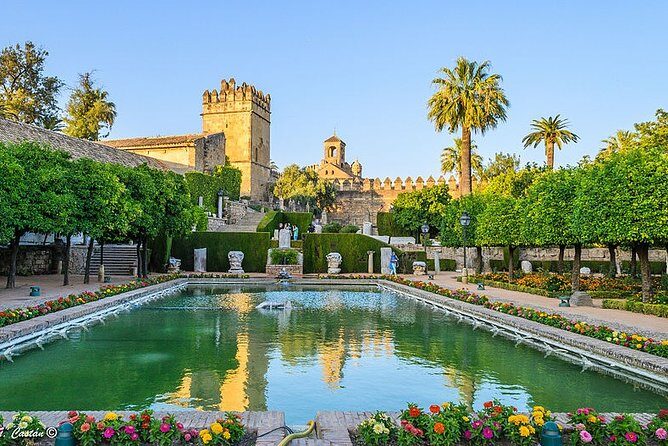
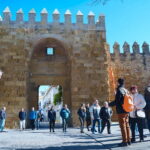
Your visit begins with the Alcázar de los Reyes Cristianos, and that first entrance gate is a big part of why guided tours help. You’re stepping into a site that started as fortress work, then got re-used when the Caliphate era arrived. The result is a complex building where different layers exist side by side.
Look for the “structure clues” your guide points out. Even if you don’t know architecture terms, you can still follow the logic: the site was chosen because it made sense defensively, then later it made sense politically and socially. When you hear that shift—fortress function to royal residence—you start understanding why certain spaces feel enclosed, why others open up, and why decoration appears where it does.
This stop is also where you’ll get the overall orientation. A guide should set expectations early, so when you later see mosaics or bath spaces, you know what you’re looking for. If your language is Spanish that day, don’t worry—good guides still guide you through with gestures and clear location cues.
The key value here: you’re not just touring rooms. You’re touring the idea of how the same ground hosted different systems of power.
Patio Morisco and Moorish baths: the spaces where water tells a story
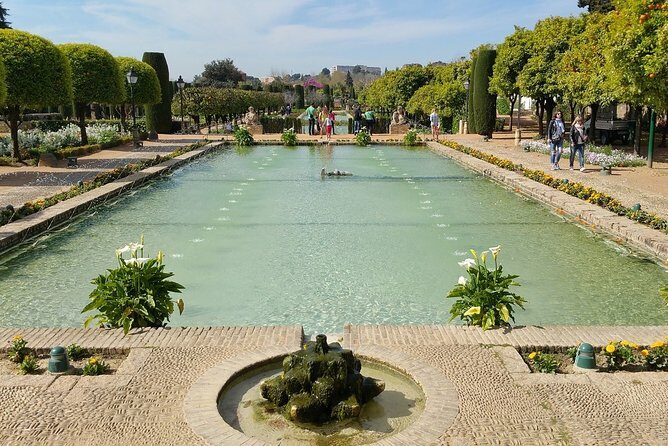
If you want one part of the Alcázar that feels instantly memorable, it’s the Patio Morisco and the Moorish baths. This is the area where the palace stops being abstract and becomes practical and human.
The patio setting helps you visualize court life. Think cooling water features, shaded movement, and the way gardens and architecture worked together to soften hot days. The Moorish baths add another layer: you get to see how bathing was integrated into the palace experience rather than treated as something thrown in later.
What I like about this portion is how it links design to daily comfort. The baths aren’t just “historic bathrooms.” They represent a whole approach to water use, privacy, and routine. When a guide explains the function behind what you see, the space makes sense even if you’re not a history expert.
One more note from real-world experience: this area tends to be a fan favorite. People often end up focusing on the patios and bath spaces more than the indoor rooms, because the atmosphere does a lot of the work for you. If you’re short on time, this is where your attention should go first.
Mosaics and royal rooms: understanding Isabella I and Ferdinand II through details

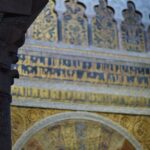
After the bath area, the tour shifts toward the palace’s royal rooms and the mosaics. This is where you’ll see how decoration served status. Mosaics in particular aren’t just pretty surfaces—they’re craftsmanship, taste, and identity laid down in stone and tile.
The official guide’s job here is to connect visuals to story. You’ll hear how the Alcázar became a residence tied to Isabella I and Ferdinand II, and how the site’s earlier history influenced what was kept, what was modified, and what was emphasized.
You’ll also get the dramatic kind of context that makes a palace feel alive, including the story of the meeting involving Isabella and Ferdinand and the name of Christopher Columbus. Even if you only catch part of that background, the guide should make the connections clear enough that the moment doesn’t feel like a random trivia drop.
One consideration: the Alcázar isn’t enormous compared to bigger showpieces like Córdoba’s Mosque-Cathedral. The visit is focused, and that’s a good thing. Just know that if you expect wall-to-wall rooms for hours, you may wish you booked a longer option or paired it with another Córdoba sight.
A few more Cordoba tours and experiences worth a look





Watchtower views and gardens: the part you’ll remember on your way out
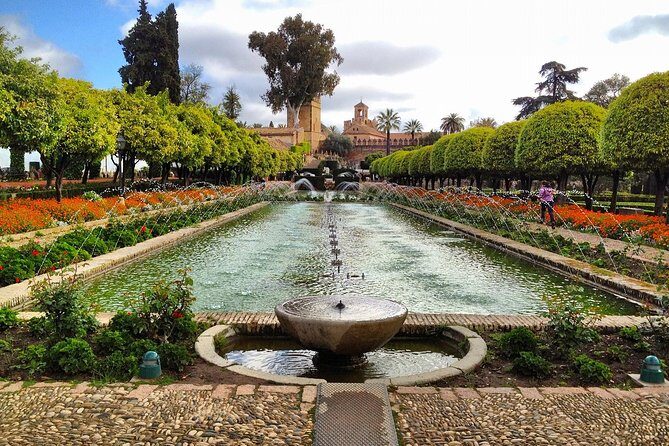
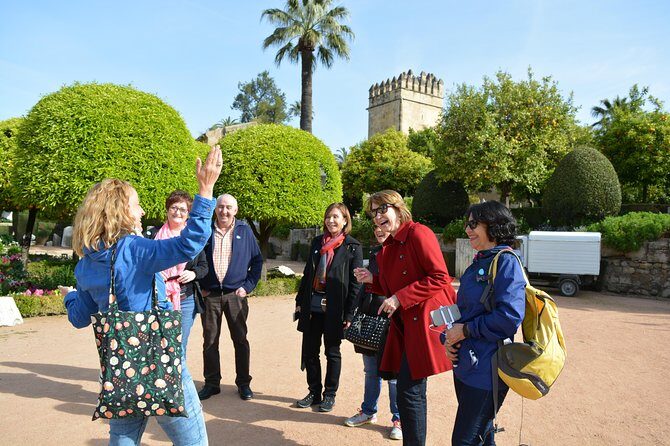
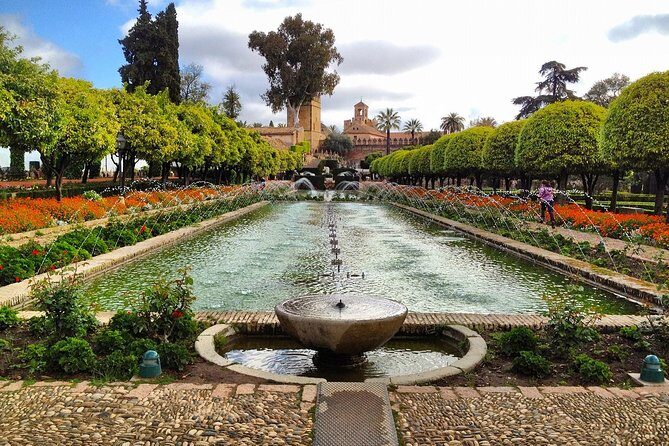
If the palace interiors are the “text,” the gardens and watchtower views are the “cover art.” The Alcázar’s watchtowers give panoramic sightlines over gardens, and that final stretch is often when everything clicks.
In practice, this means you’ll end up slowing down. Water features, mature trees, and the general calm of the grounds make the views feel earned instead of rushed. If you can, aim to enjoy this portion earlier in the day to dodge heat and crowd pressure. People tend to be happiest here when they’re not swatting through summer-day crowds.
The watchtower perspective also helps you understand the palace’s placement. When you look out from above, the layout becomes clearer: the built spaces relate to the gardens in a way that feels intentional rather than accidental. A guide explaining the sightlines makes this section go from pretty to meaningful.
One thing to keep in mind: some tower access can depend on the day and timing. If a portion is closed while you’re there, don’t assume the entire tour failed—ask your guide what you can still see from other viewpoints and focus on the gardens that remain open.
How long it takes and what to expect on-site
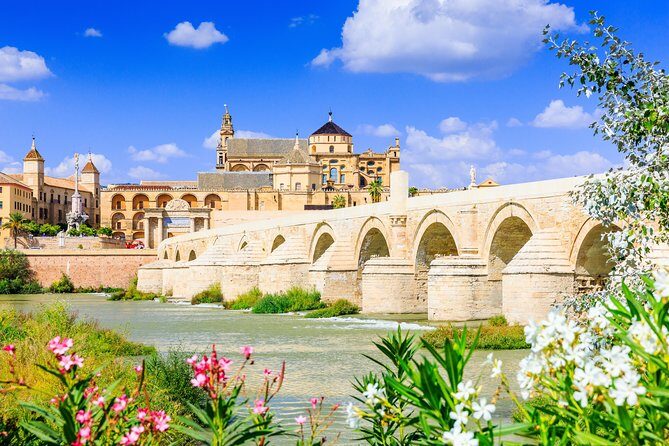
This tour is listed at about 1 hour 10 minutes. That is a workable length for a historic monument like the Alcázar: long enough for mosaics, baths, and views, short enough that you won’t feel stuck all day.
What I’d plan in real terms:
- Expect a guided pace with stops at key rooms and outdoor areas
- Save time for photos, especially in the gardens and near the watchtower viewpoints
- Keep water handy. Gardens are relaxing, but Córdoba heat can still sneak up on you
Group size helps. With a max of 15, you’re less likely to be trapped behind a wall of people during the tight turns between spaces.
If you’re sensitive to language speed, you’ll want to check the day’s tour language before you commit. Some guests have noted fast pacing when the tour language wasn’t what they expected. That doesn’t mean the content is bad—it just means you’ll want to be mentally prepared and read your voucher carefully.
Price check: is $22 good value for the Alcázar of Córdoba?
At $22 per person, this is an attractive option compared with what you often pay for timed, guided entry in popular Spanish cities. The value isn’t just the ticket. You’re paying for an official guide and a structured route through the site, which is the difference between seeing pretty spaces and understanding what you’re actually looking at.
Here’s the balanced reality check:
- If you’re the type who enjoys monuments with a guide explaining history and context, $22 feels fair. In a place with layered eras like this, a guide helps you connect the dots fast.
- If you’re comfortable DIY-ing and reading signage, you might decide you only need the basic entrance ticket. Some people have mentioned that the on-site general admission can be much lower, so going solo can reduce cost.
So who is this best for? If you want your time to count—and you want the stories tied to Isabella I and Ferdinand II without hunting for them yourself—this tour makes sense. If you’re trying to stretch your budget and you enjoy museum-on-your-own rhythm, you might compare it against the site’s regular ticket cost and decide based on your tolerance for explanation.
Should you book the Alcázar of Córdoba small-group tour?
Yes, if you want an efficient, guided way to experience Córdoba’s Alcázar and you care about understanding the layers instead of just taking photos. I’d especially recommend it if you’re going during busy hours or if you want the Moorish baths and garden viewpoints to feel connected, not random.
Book it if:
- You like guided context for historic sites
- You want skip-the-line entry with less hassle
- You’ll appreciate a 15-person group pace
- You’re interested in Isabella I and Ferdinand II stories and how they relate to the palace
Skip it (or DIY instead) if:
- You strongly prefer independent wandering
- You’re very budget-driven and don’t need the guided explanation
- You’re traveling when tour language details might mismatch your expectations, and you don’t want any surprises
If you do book, arrive a little early at Plaza del Triunfo so ticket pickup doesn’t start your visit on a stressful note. Then focus on the baths and the gardens. Those are the moments that tend to stick.
FAQ
How long is the Alcazar of Cordoba small group tour?
It lasts about 1 hour 10 minutes.
What is included in the $22 ticket?
You get an official guide and the Alcázar admission ticket.
Is transportation included?
No, transportation is not included.
How many people are in the group?
The tour has a maximum of 15 travelers.
Where do I meet the guide?
You start at OWAY Tours, Pl. del Triunfo, s/n, Centro, Córdoba. The tour ends at Alcázar de los Reyes Cristianos, C. Caballerizas Reales, s/n, Centro.
What language is the tour offered in?
The language can vary. On Sundays, OWAY Tours offers tours only in Spanish, so check your voucher to confirm what language you’ll receive.
Can I cancel for free?
Yes. You can cancel up to 24 hours in advance for a full refund. If you cancel less than 24 hours before the start time, the payment isn’t refunded.