REVIEW · CORDOBA
Mosque-Cathedral, Alcazar & Jewish Quarter with Tickets
Book on Viator →Operated by OWAY Tours · Bookable on Viator
Córdoba’s monuments explain each other fast. This tour strings together three of the city’s biggest sites with live English commentary, and it includes admission tickets for the Mosque-Cathedral, the synagogue area in La Judería, and the Alcázar de los Reyes Cristianos. I like that you’re not just looking at buildings—you’re learning what changed, who ruled, and why the same spaces keep getting reused.
I especially like the guide format: the group walks between spots, and you hear the stories in your headset system. The walk also gives you context before you even reach the headline monuments, starting near the Roman Bridge Gate and crossing the river area on the way in.
One thing to consider: the Alcázar stop can shift if the complex is closed for restoration or special schedules. In those cases, you may get gardens and other included alternatives instead of the full interior experience.
In This Review
- Quick hits before you go
- Why Córdoba’s three sites fit together so well
- From the Roman Bridge Gate to your first big photo moments
- Alcázar de los Reyes Cristianos: palace history, and what to do if it’s closed
- La Judería in about an hour: synagogue, Arabic market, and Maimonides
- Mosque-Cathedral of Córdoba: the guide’s job is to make the layers make sense
- Headsets, crowds, and walking pace: the on-the-ground reality
- Price and value: what $58.03 is buying you
- Should you book this Córdoba combo tour?
- FAQ
- How long is the tour?
- Where do I meet, and where does the tour end?
- What’s included in the price?
- Is the tour offered in English?
- Are the admission tickets guaranteed for all three sites?
- How large is the group?
- Can I cancel for free?
Quick hits before you go
- Three ticketed landmarks in one outing: Alcázar, Mosque-Cathedral, and the synagogue/La Judería area
- Live guide with a headset system: helpful in crowded streets and inside monuments where voices carry poorly
- Start with the city’s river crossings: Roman Bridge Gate and a walk over the Guadalquivir river area
- La Judería stops you can picture fast: synagogue visit, Arabic market area, and a bronze statue of Maimonides
- Mosque-Cathedral with the key timeline explained: built starting in the 8th century, later expanded, and eventually turned into a Catholic cathedral
- Expect possible Alcázar substitutions: if the Alcázar interior is inaccessible, the tour adapts to included alternatives
Why Córdoba’s three sites fit together so well
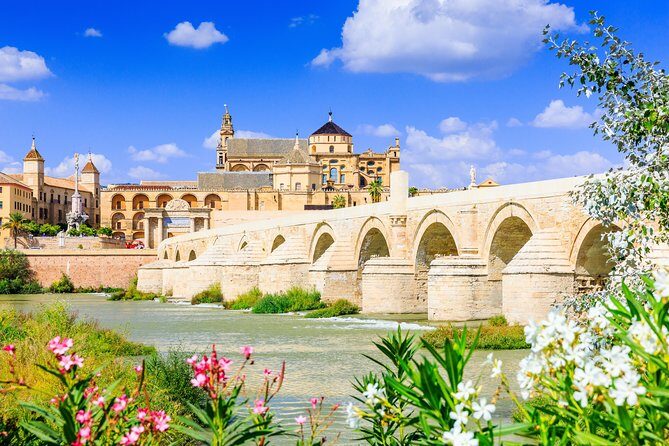
Córdoba can feel like three different cities taped together: Roman-era pieces outside, Islamic-era architecture at the center of town, and later Christian reuse layered on top. What I like about this tour is that it doesn’t treat those layers like separate facts. It connects them into one route.
You start with river-and-city framing, then you move into power and palace life at the Alcázar, then you shift into the Jewish Quarter area with stops tied to medieval Sephardic life. Finally, you reach the Mosque-Cathedral, where the whole story of reuse—Islamic mosque style first, later changed into a Catholic cathedral—is the main event.
This is a strong choice if you’re short on time. If you want a guided answer to the question Why does Córdoba look like this?, this route is built to give you that.
Other Mosque-Cathedral tours we've reviewed in Cordoba
From the Roman Bridge Gate to your first big photo moments
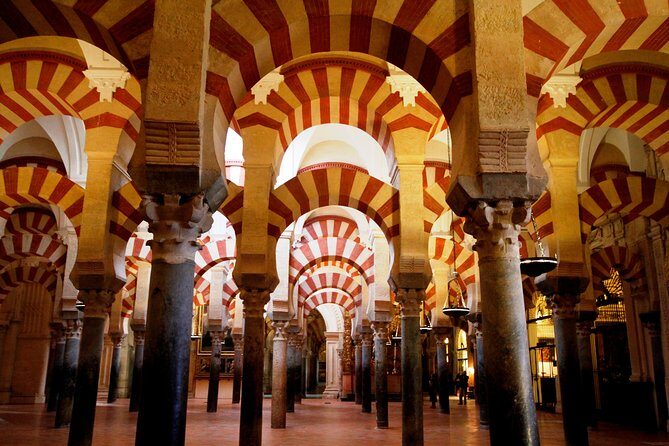
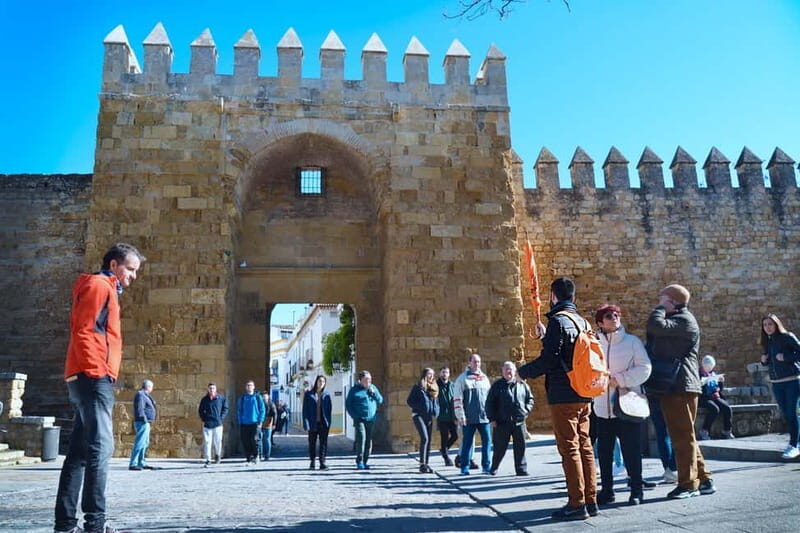
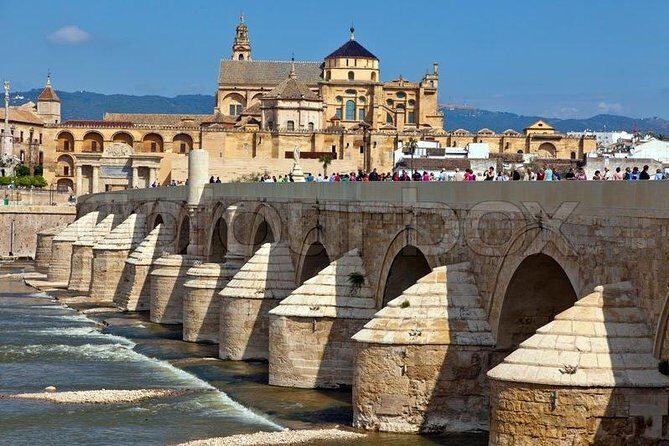
The tour kicks off at Tours in Cordoba – Oway Tours on Pl. del Triunfo. You’ll begin with views near the Statue of the Custodian of San Rafael and the Roman Bridge Gate, which is a nice way to get oriented before you sprint into museum mode.
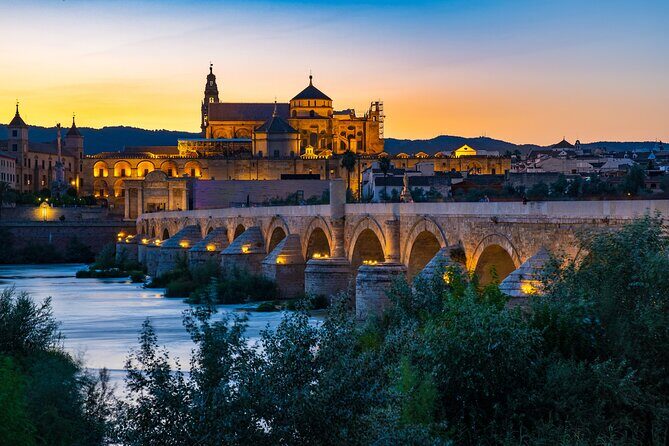
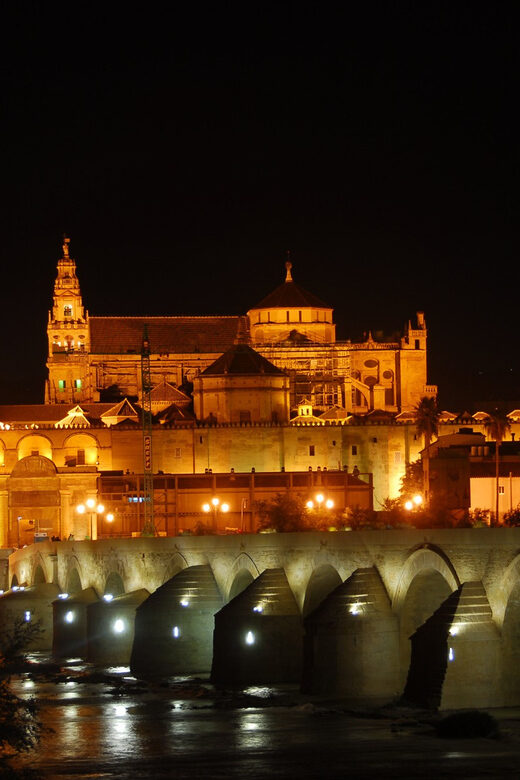
From there, you walk toward the Roman bridge over the Guadalquivir. Even if you’ve seen river crossings in other Spanish cities, this one helps you understand why Córdoba grew where it did. It also breaks up the day so you’re not hitting a ticketed site every ten minutes.
For me, this early walking stretch is the “set the stage” part of the tour. If you’re the type who likes to know where you are before the facts start flying, you’ll appreciate it.
Alcázar de los Reyes Cristianos: palace history, and what to do if it’s closed
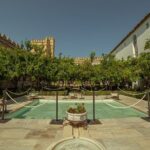
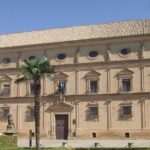
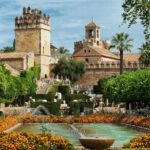
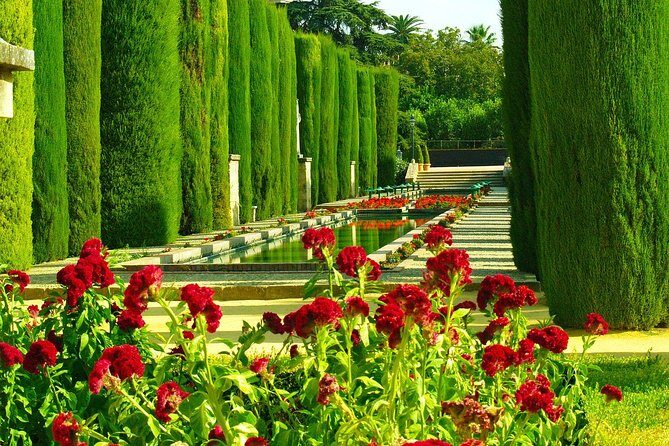
Stop 1 is Alcázar de los Reyes Cristianos, and it’s positioned as both a royal residence and a site with multiple eras underneath. The story you’re given is specific: it served as a primary residence of Isabella I of Castile and Ferdinand II of Aragon, and it sits on a location tied to earlier fortifications, including a fortress built by the Visigoths and later occupied by the Caliphate of Córdoba.
You’ll enter through the main entrance gate and spend about an hour there, with a ticket included in the tour package. That hour matters because you don’t just get the “pretty place” version. You get the timeline behind the architecture: who built, who took over, and why the palace mattered.
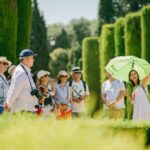
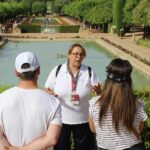
Here’s the practical catch: the Alcázar interior can be inaccessible due to restoration or special schedules. When that happens, the tour adjusts and focuses on included alternatives (gardens, and in some cases other spaces like the Caliphal Baths/Hammam). People have described smooth substitutions when this comes up, but it can still change what you’re expecting to see.
If you’re set on seeing the Alcázar’s inside rooms no matter what, do a quick check close to your travel dates. If you’re happy with the story and the allowed spaces, this part stays worthwhile.
La Judería in about an hour: synagogue, Arabic market, and Maimonides
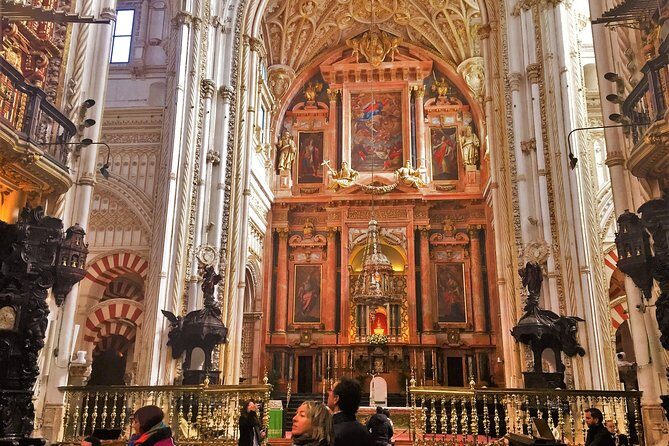
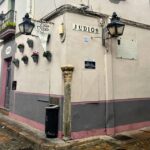
Next you head into La Judería, the historic Jewish Quarter. You’re scheduled for roughly an hour on foot, and it’s built around a few high-signal stops rather than trying to cover everything.
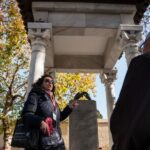
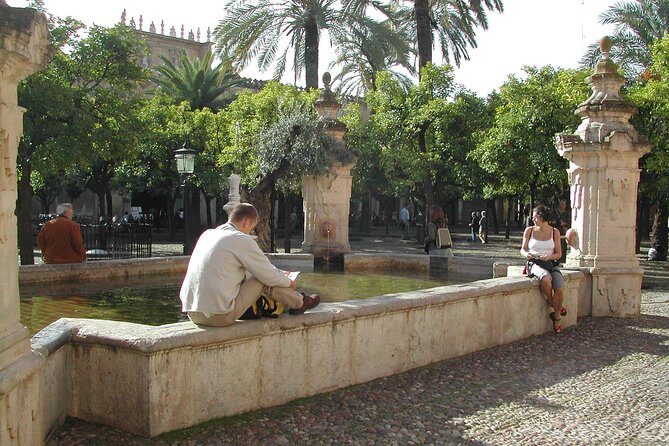
This portion includes admission to the synagogue area, time around an Arabic market setting, and a stop for the bronze statue of medieval Sephardic philosopher Maimonides. That mix is smart because it’s not only about one community or one building. You get a sense of daily life, trade, and the intellectual reputation that Córdoba carried in medieval times.
A heads-up based on real-world experience: this neighborhood can feel tight and busy depending on the day, and the walking can be uneven in places. If you’re sensitive to crowds or narrow streets, go slowly and plan to use the headset system rather than relying on spotting sound cues.
Also, the Jewish Quarter stop may feel smaller than some people expect in terms of time. If your main goal is the Mosque-Cathedral, you’ll still get the context you came for—but don’t expect an all-day wander here.
Mosque-Cathedral of Córdoba: the guide’s job is to make the layers make sense
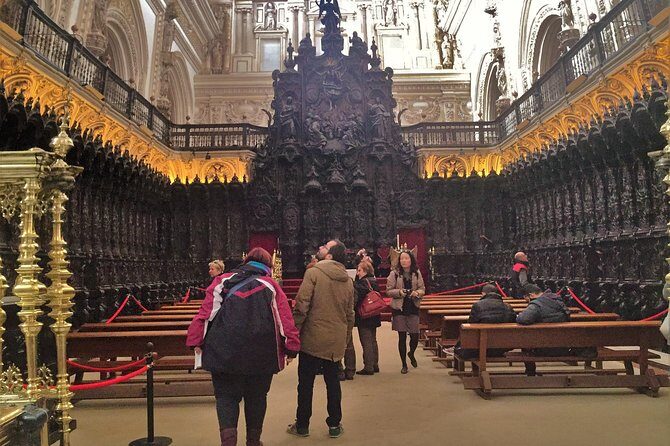
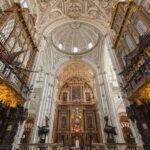
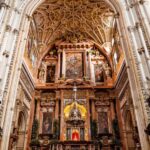
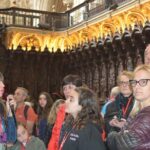
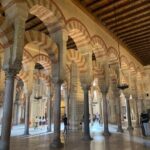
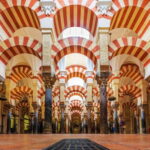
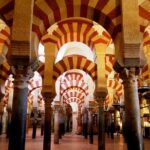
The final major stop is Mosque-Cathedral de Córdoba, the headline monument on this route. You’re scheduled for about an hour inside, with a ticket included.
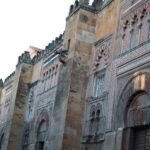
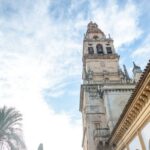
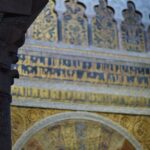
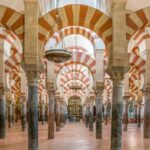
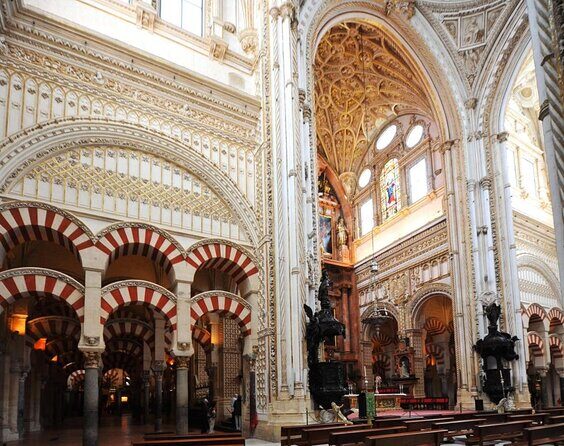
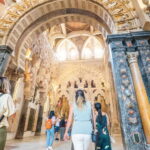
The key thing the tour does for you is explain the building’s big transformation. The construction begins in the 8th century, and while it retains the decorative style of an Islamic mosque, later extensions expanded it dramatically. At one point it’s described as the second biggest mosque in the world before it became a Catholic cathedral.
That’s a lot to take in on your own. With a guide, you’re not just looking at an architectural mash-up and guessing the order of events. You get the sequence explained in real time while you’re standing there.
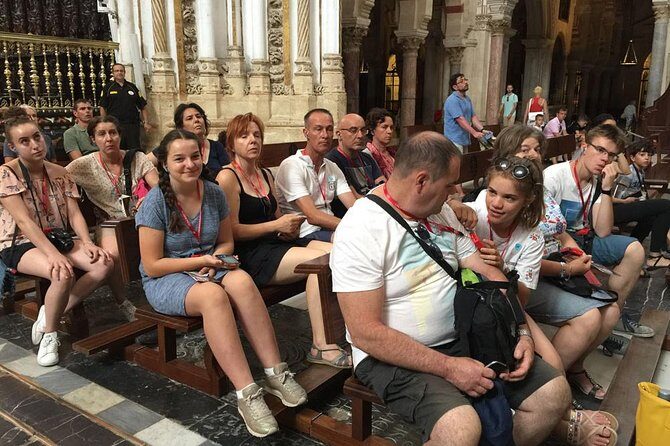
If you want to maximize the time you spend inside, show up ready to listen. This is where the headset system earns its keep. And if there are long lines or special crowd conditions, a good guide helps you keep moving without losing the narrative.
Guides named Paloma, Azara, Jose, and Micaela have been singled out in different experiences for making the history feel organized and clear—so the odds of a strong interpretation are decent.
Other Jewish Quarter tours we've reviewed in Cordoba
Headsets, crowds, and walking pace: the on-the-ground reality
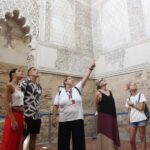
This is a walking tour through historic streets. The company keeps group size to a maximum of 25, which helps: you’re not stuck in a giant stampede where everyone is talking over everyone else.
You also get headsets, which are specifically included so you can hear the guide in noisy areas and while walking. That said, not every day is perfect. Some experiences note issues like receivers with bad sound or broken units, so it’s smart to have a backup mindset. If you’re picky about audio, bring your own basic personal headphones as a failsafe.
Pacing is generally relaxed, with stops timed so you spend a realistic amount of time at each ticketed monument. One person even mentioned the tour felt worth it even at around 3 hours 45 minutes. Still, if you hate walking on uneven ground, this route might feel like more work than you expect.
Bottom line: wear comfortable shoes, keep your expectations aligned with a guided highlight route, and use the headset instead of trying to catch snippets from across the street.
Price and value: what $58.03 is buying you
At $58.03 per person, the headline value is the package of tickets plus a professional guide. You’re paying for admission to three major monuments (synagogue area in La Judería, the Mosque-Cathedral, and the Alcázar-related visit). You’re also paying for interpretation—meaning you’re not just purchasing entry fees. You’re paying for someone to connect the layers.
On days when the Alcázar interior is closed, the value question comes up. The tour is designed to adjust to included alternatives like gardens and other accessible historic spaces. That can still feel like a win if you came for the story of Córdoba and not just one room in one palace.
So I’d frame the decision like this: if you want a guided route that reduces guesswork and turns three ticket lines into one organized timeline, this price makes sense. If your plan is mostly about one monument and you prefer to wander slowly on your own, you might prefer a smaller, single-site visit.
Should you book this Córdoba combo tour?
I’d book it if you:
- Want a guided intro that connects Alcázar → La Judería → Mosque-Cathedral without jumping between separate tours
- Like structure—three main stops, guided by someone explaining how the city layers changed over time
- Are comfortable walking a historic center and using headsets to follow the narration
I might skip it (or at least double-check expectations) if you:
- Are obsessed with seeing the Alcázar interior no matter what, since closures can force substitutions
- Have strong concerns about audio quality and don’t want any chance of headset issues
- Only care about one monument and would rather spend extra time there on your own
FAQ
How long is the tour?
It runs about 3 to 4 hours (approx.).
Where do I meet, and where does the tour end?
You meet at Tours in Cordoba – Oway Tours, Pl. del Triunfo, s/n, Centro, 14003 Córdoba. The tour ends at the Mosque-Cathedral Monumental Site of Córdoba, C. Cardenal Herrero, 1, Centro, 14003 Córdoba.
What’s included in the price?
The tour includes a professional guide, a headphone system, and admission tickets for the synagogue, the Mosque-Cathedral, and the Alcázar.
Is the tour offered in English?
Yes, it’s offered in English.
Are the admission tickets guaranteed for all three sites?
Admission tickets are included for the synagogue, the Mosque-Cathedral, and the Alcázar, but the Alcázar visit can be affected by restoration or special schedules.
How large is the group?
The maximum group size is 25 travelers.
Can I cancel for free?
Yes. Free cancellation is allowed up to 24 hours in advance for a full refund.