REVIEW · CORDOBA
Córdoba: Medina Azahara 3-Hour Guided Tour
Book on GetYourGuide →Operated by OWAY Tours · Bookable on GetYourGuide
Medina Azahara feels unreal for a short time. This 3-hour guided tour takes you into the palace-city of the Caliphate, with an archaeologist guide tying the stones to the people who built them. You’ll cover major areas like the House of Ja’far and the setting linked to Abd-ar-Rahman III, so it’s not just walking—you’re learning the logic of the site.
What I like most is that the tour is guided by an archaeologist-style specialist, which helps the story stay grounded in what’s actually visible. I also like the practical format: a visitor-center start plus a focused walk through the complex. One consideration: if you choose a specific departure time, you should stay flexible, because at least some bookings report that the start time can be changed with little explanation.
In This Review
- Key things to know before you go
- Entering The Medina Azahara story in just 3 hours
- The archaeologist guide: what “specialist” really means on-site
- Córdoba to Medina Azahara: two transport choices, same destination
- Visitor Center Medinat al-Zahra: get your bearings before the ruins
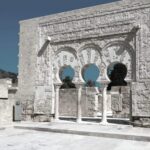
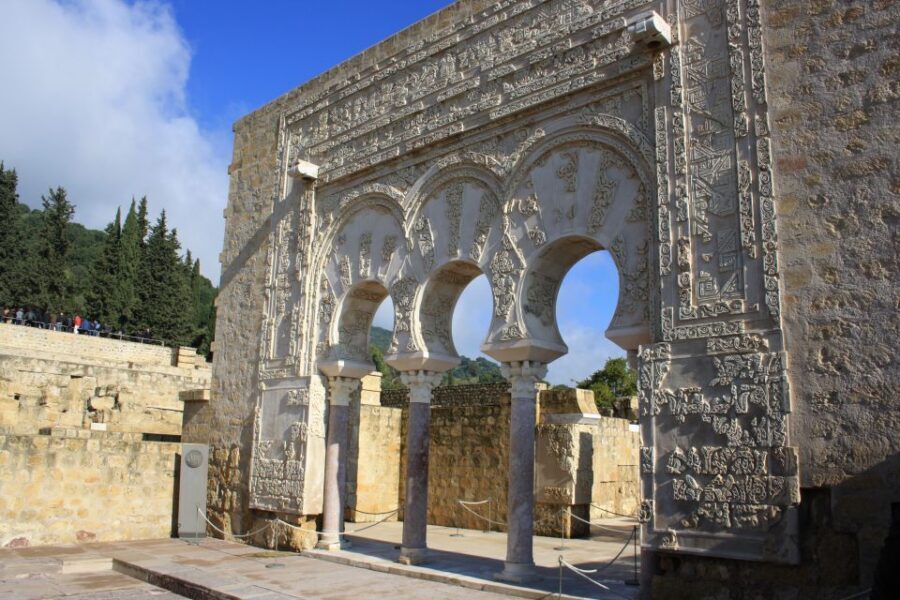
- House of Ja’far: the palace built over earlier homes
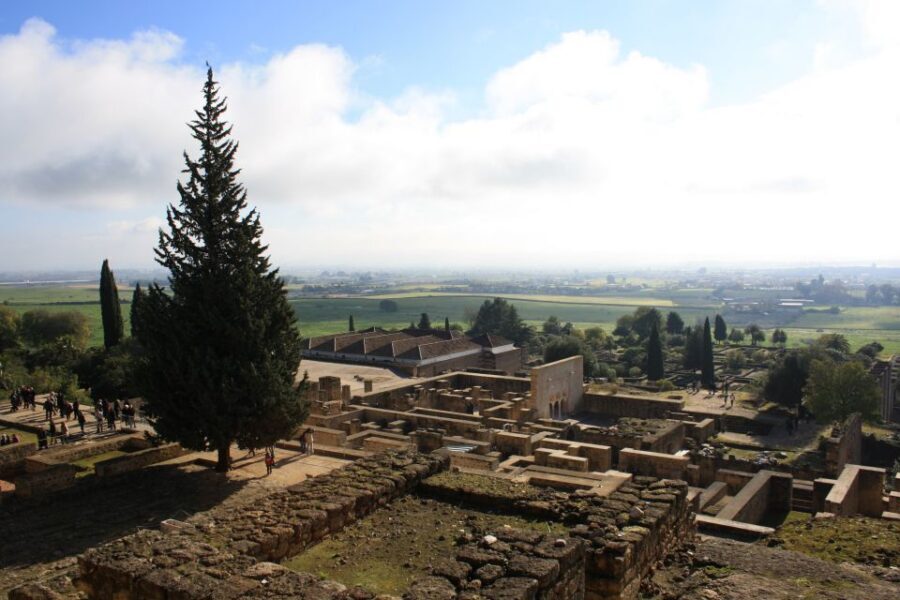
- Pórtico de Medina Azahara: seeing scale without a roof
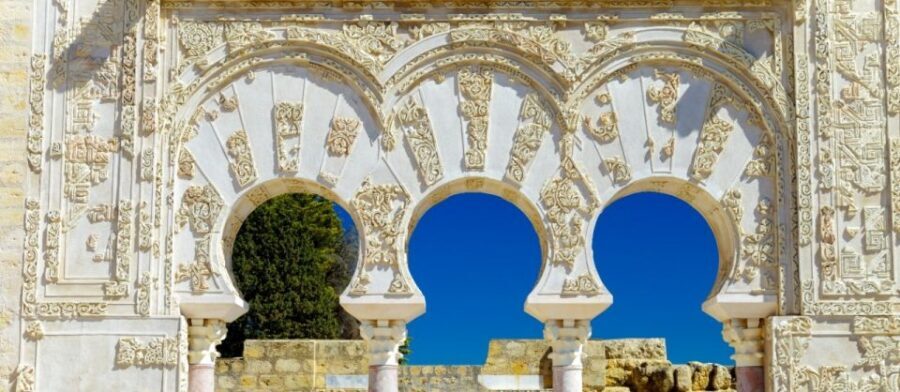
- Salón Rico (exterior): where guests would have been received
- Price and value: is $19 worth 3 hours?
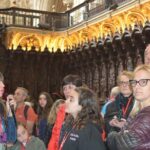
- Group tour rhythm: efficient, but know what you’re signing up for
- What you’ll need to bring (and what you should not)
- Who should book this Medina Azahara guided tour?
- Should you book Medina Azahara with an archaeologist guide?
- FAQ
- How long is the Medina Azahara guided tour from Córdoba?
- Is transportation included?
- Where do you start in Córdoba?
- What does the tour include?
- What language is the tour?
- What should I bring, and what isn’t allowed?
Key things to know before you go
- Archaeologist-led explanations help you connect ruins to real Umayyad-era decisions and layout
- Visitor Center setup gives you a base layer before you enter the ruins, including a 3D intro for many groups
- House of Ja’far detail: built over the remains of three earlier houses, which shows how the palace evolved
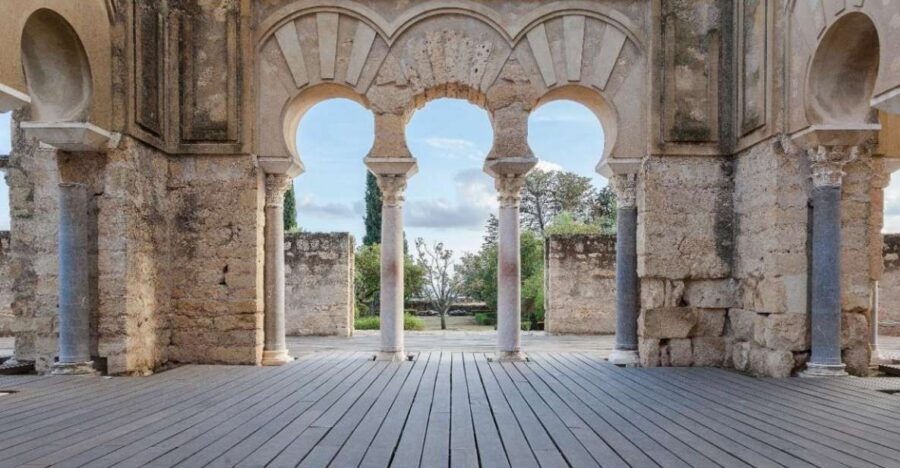
- Pórtico remains let you see scale even when major structures aren’t standing
- Exterior look at Salón Rico shows where Abd-ar-Rahman III would have received guests
Entering The Medina Azahara story in just 3 hours
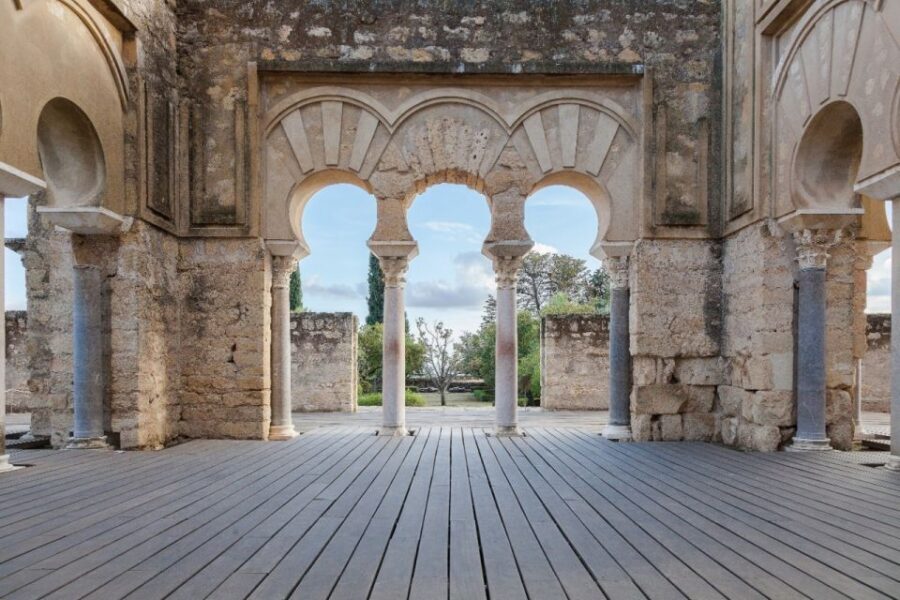
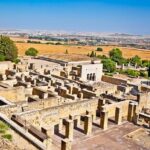
Medina Azahara is about scale and intention. From the first moments, the goal is to help you “read” the site: not as random stones, but as a planned palace-city with rooms, corridors, and spaces designed for power and ceremony. A tight 3-hour window sounds short until you realize how much you can grasp once someone helps you understand what each section likely meant.
The tour is built around the idea that you’ll learn while you move. You don’t just arrive, shuffle, and leave. You get a guided walk through the key parts of the complex, plus time at the visitor area to frame what you’re about to see. That matters, because Medina Azahara is spread out and the ruins are the kind that reward context.
For 3 hours, the focus stays sharp: you’re not chasing every broken wall. You’re getting the most important pieces—enough to understand the Umayyad Caliphate presence in al-Andalus, and enough to make the site stick in your head after you’ve driven back toward Córdoba.
Other Medina Azahara tours we've reviewed in Cordoba
The archaeologist guide: what “specialist” really means on-site
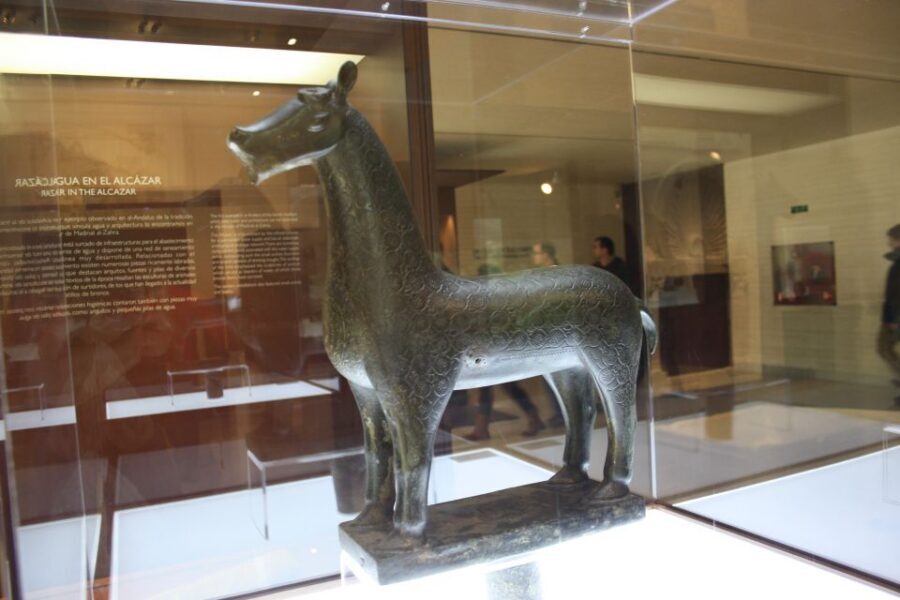
This tour is led by a live guide, and the emphasis is on archaeological history. In plain terms, you should expect explanations that talk about what was found, how it fits into the palace design, and why certain areas were built or rebuilt. That’s the difference between a generic “this used to be important” tour and something that makes the place make sense.
Recent feedback highlights two guide skills that matter to you:
- Clear, structured storytelling that keeps you oriented as you move through the complex
- Strong audio support, with headphones mentioned as fantastic for staying on track
Names showing up in praise include Sergio and Cristina, both called out for being smart with the material and good at communicating it. Even if your guide isn’t one of them, the lesson holds: the best part of this experience is the explanations, not just the access to the site.
If you’re the type who likes to ask why something was built, this is your format. You’ll walk away with an idea of how the Umayyads shaped Córdoba’s political and cultural world—especially tied to Abd-ar-Rahman III, a name that comes up as you see guest-reception spaces linked to leadership.
Córdoba to Medina Azahara: two transport choices, same destination
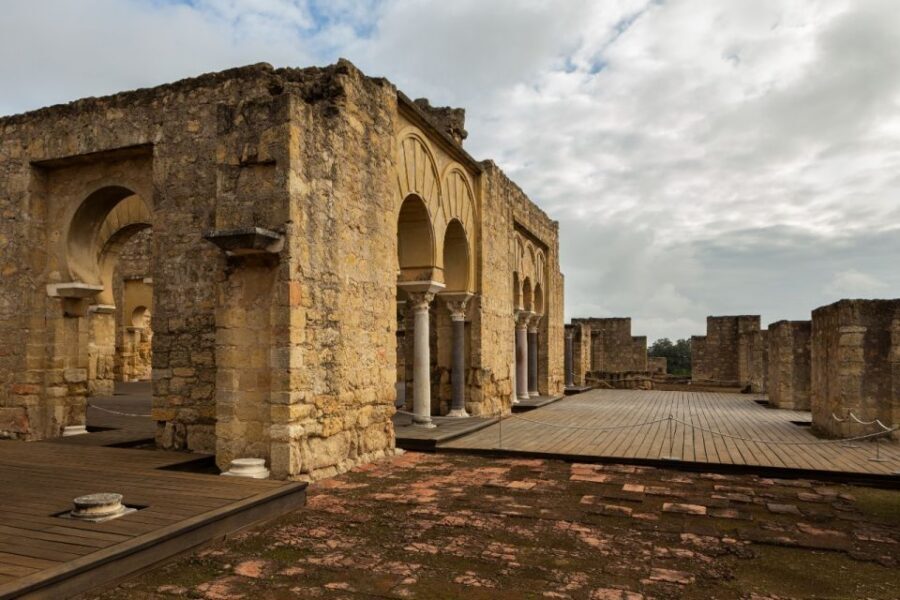
You’re heading about 8 kilometers from Córdoba, so transportation is part of the day’s rhythm. This tour gives you two main options:
If you pick roundtrip transportation, you travel in an air-conditioned van and you’ll start at Glorieta Cruz Roja (Ctra. Palma del Río, 4P). The ride is short—about 15 minutes—so you’re not spending the day commuting. It’s a good way to keep the experience concentrated.
If you book without transport, you handle your own ride, and the guide meets you at the Medina Azahara Visitor Center. The practical tip here is simple: if you’re relying on public options, plan ahead. The information suggests booking the tourist bus in advance if you don’t have your own vehicle.
Either way, think about comfort and timing. A 3-hour guided tour is tight, and it doesn’t leave much room for last-minute transportation surprises. If you’re traveling on your own, the “meet at the visitor center” option can feel smooth—just make sure you’re there before the guide starts.
Visitor Center Medinat al-Zahra: get your bearings before the ruins
Your tour begins at the visitor center area (Medinat al-Zahra). This is more than a waiting room. It’s the staging point that helps the site click, especially if you’re not coming with background knowledge.
One thing that’s specifically praised is a 3D video shown at the start. Even if you’re not a “museum video” person, this is helpful here because it gives you a mental model for how the palace sections relate. Ruins can be hard to visualize at ground level, and a visual intro can save you from spending the tour guessing.
You’ll also get your headphones/earpieces setup (mentioned as excellent), which makes the guide’s voice easier to follow when you’re walking through open areas. That matters because Medina Azahara can involve uneven terrain and wide sightlines where it’s easy to lose audio.
If you want to enjoy the later walking part, treat the visitor center portion as your cheat sheet. After that, you’ll recognize what you’re looking at, not just what you’re standing near.
House of Ja’far: the palace built over earlier homes
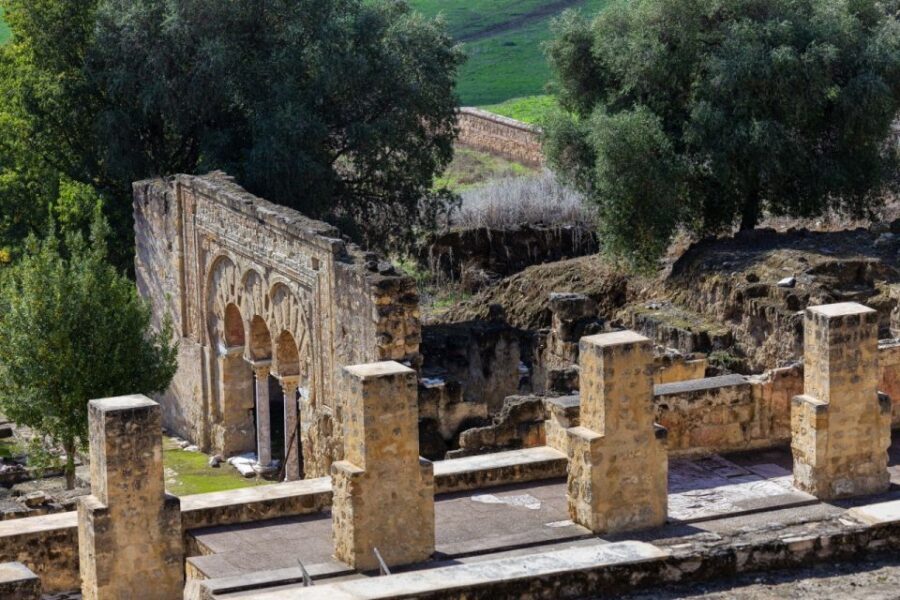
Once you’re in the complex, one of the standout stops is the House of Ja’far. This isn’t just a “nice room” moment—it’s a design-and-evolution moment.
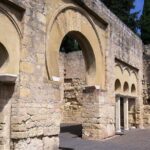
Here’s the key detail that makes it interesting: the House of Ja’far was built over the site of three earlier houses. That tells you the palace-city wasn’t static. It was a place where building decisions continued over time, with new structures replacing or integrating what came before. Seeing that layering helps you understand the Umayyad approach: consolidate, expand, and refine.
What you’ll get from this stop is a sense of how the palace functioned as a living complex rather than a one-time construction project. Even if much of the structure is now fragmentary, the layout and positioning help you imagine the continuity—and why certain locations stayed important.
Potential drawback: because much of what you see is remains and foundations, you may wish you had a bit more time to walk slowly and take photos from multiple angles. This is still one of the best moments in the tour, but it’s not a “stand in a preserved room” experience.
Other guided tours in Cordoba



Pórtico de Medina Azahara: seeing scale without a roof
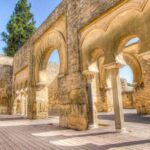
After the House of Ja’far, you’ll move toward the Pórtico de Medina Azahara remains. This section is valuable for one big reason: it helps you grasp how large and ceremonial the palace-city was meant to feel.
A pórtico is about framing movement. Even when the structure isn’t fully intact, the remaining sections can show you:
- where people would have walked through
- how spaces would have directed attention toward central areas
- how architecture created a sense of order and authority
This stop also helps you “feel” the design at a human scale. You’re learning what these buildings tried to communicate, not just dates and names.
If you’re sensitive to walking on uneven grounds, plan for comfortable footwear. The tour is short, but it still involves moving around a site that wasn’t built for modern strolls.
Salón Rico (exterior): where guests would have been received
You’ll also visit the exterior area of the Salón Rico, the reception hall connected with Abd-ar-Rahman III. The tour doesn’t position this as a full interior visit—what you’re seeing is the exterior viewpoint.
That’s still worth your time. Why? Because reception spaces matter. This is where power becomes visible. The exterior setting helps you picture how the caliphate projected status through architecture and placement. Even if your access is limited to exterior views, the guide’s explanation is what turns that view into a meaningful stop.
For many visitors, this is the “anchor” moment. You’ve learned the palace-city concept earlier, you’ve seen evolution in places like the House of Ja’far, and then you reach a high-status reception reference tied to a specific leader. It helps the tour end with a clearer takeaway.
Price and value: is $19 worth 3 hours?
At about $19 per person for a 3-hour experience, you’re paying for three things:
1) an entrance ticket
2) a guide (with archaeological history focus)
3) optional shuttle transport from Córdoba
That’s a strong value combo if you’re traveling with limited time. Medina Azahara isn’t the kind of site you always want to self-tour if you’re hoping to understand what you’re looking at. With a guide, you can focus on the big meaning points: why this area mattered, how it evolved, and how Umayyad leadership shows up in built form.
Where value depends on you is this: do you want the structured storytelling? If yes, the price feels fair because the guide is the main part of the service, not just transportation. If you prefer wandering without explanations, you might feel you’re paying mainly for access and a brief orientation.
One more angle: the tour is in Spanish. If you don’t speak Spanish well, value drops because the guide is central to the experience. If you do speak it, you’re in good shape.
Group tour rhythm: efficient, but know what you’re signing up for
A 3-hour guided tour has a rhythm by design. You’ll likely start with a setup (visitor center), then move into the palace-city highlights. That efficiency is part of why the tour works: it delivers key points without turning the day into a long haul.
Still, keep your expectations realistic. Ruins can’t be rushed, and some visitors want more time for photos or to read stone-level details. This tour doesn’t aim to satisfy the “every last corner” crowd. It’s aiming for the “I want to understand this place” crowd.
Also, pay attention to timing for your preferred departure slot. One piece of feedback points to time changes after booking, so build in flexibility. If your travel day is tightly scheduled, plan a buffer.
What you’ll need to bring (and what you should not)
This is the easy checklist:
Bring:
- Passport or ID card
Not allowed:
- Pets
- Luggage or large bags
If you’re traveling light, good. If you’re carrying bulky items, plan storage or packing before you arrive. Medina Azahara is about moving through an archaeological space, and the rules are meant to keep things smooth for everyone.
Who should book this Medina Azahara guided tour?
This tour is a good match if:
- you want a guided understanding of Umayyad Córdoba without spending a full day
- you like archaeology explanations tied to what’s still visible
- you want to connect names like Abd-ar-Rahman III to real locations you can see
It may feel less ideal if:
- you want to roam freely without a schedule
- you need extra mobility time beyond a short walking circuit
- you’re looking for mostly preserved interiors (this is mostly ruins and exterior views)
The format also works well for couples, solo travelers, and visitors who want a confident “first taste” of Medina Azahara.
Should you book Medina Azahara with an archaeologist guide?
If you have limited time in Córdoba, I’d book it. For around $19, you’re buying a guided framework plus an entrance ticket, and the tour focuses on the most meaningful stops: House of Ja’far, the Pórtico remains, and the exterior context of Salón Rico tied to Abd-ar-Rahman III. The guide quality is the headline, and that’s backed up by praise for clear explanations and excellent audio support (including headphones), plus a 3D start for many groups.
If your plans are very time-sensitive or you’re picky about exact departure timing, stay flexible and give yourself a buffer. Also, go in ready to enjoy ruins through interpretation, not through museum-style comfort.
FAQ
How long is the Medina Azahara guided tour from Córdoba?
The tour lasts 3 hours.
Is transportation included?
Transportation is included only if you choose the option with roundtrip shuttle transport from Córdoba. If you book without transport, the guide meets you at the Medina Azahara Visitor Center.
Where do you start in Córdoba?
The starting point is listed as Glorieta Cruz Roja, Ctra. Palma del Río, 4P (meeting point can vary by the option booked).
What does the tour include?
It includes the guide, the entrance ticket, and shuttlebus transport from Córdoba if that transportation option is chosen.
What language is the tour?
The live tour guide is in Spanish.
What should I bring, and what isn’t allowed?
Bring your passport or ID card. Pets are not allowed, and luggage or large bags are not allowed.