REVIEW · CORDOBA
Cordoba Monuments Intensive Tour in English Tickets included
Book on Viator →Operated by Konexion Tours · Bookable on Viator
Cordoba in a few hours is possible. This English intensive tour stitches together the key sights—Alcázar, Synagogue, Judería lanes, and the Mezquita-Cathedral—so your visit feels like a timeline, not a scavenger hunt. You get local context as you move, and you’re not stuck guessing what you’re looking at.
I like two things most. First, the audio receivers keep the guide clear even when the group compresses near entrances and on narrow streets. Second, the big-ticket site entries are included, including the Alcázar and the Mezquita-Cathedral, plus the tour ends inside the Mezquita-Cathedral area for easy extra time.
One consideration: the route is efficient, and timing can be affected by crowd flow. The Synagogue can be delayed by lines on the narrow street, and it’s closed all day on Mondays and in the afternoons on Sundays and holidays—so your inside visit may be shorter than you expect.
In This Review
- Quick take: what makes this tour click
- Why This Cordoba Monuments Tour Works in 3 to 4 Hours
- Alcázar de los Reyes Cristianos: Mudéjar Gardens and Royal Drama
- Monument to the Lovers and La Judería Lane-Walking
- The Córdoba Synagogue: Must-See, But Timing Matters
- Maimonides and Al-Gafequi: The Medical and Thinking Legacy
- San Bartolomé Chapel and the Zoco: Art Forms You Can Touch
- Faculty of Philosophy and Letters: When a Hospital Becomes a Campus
- Mezquita-Catedral de Córdoba: Why This One Hour Changes Everything
- Price and Logistics: What $66.54 Really Buys
- Who This Tour Suits Best (and Who Might Not Love It)
- Should You Book This Cordoba Monuments Intensive Tour?
- FAQ
- How long is the Cordoba monuments intensive tour?
- Is the tour offered in English?
- What’s included in the ticket price?
- Where does the tour start and end?
- What happens if the group can’t enter the Synagogue?
- When is the Córdoba Synagogue closed?
- How many people are in the tour?
- What is the cancellation policy?
Quick take: what makes this tour click
- Audio receivers help you hear clearly without playing phone speaker guessing games.
- Skip-the-line tickets save time at the major paid sites (when lines are long, this matters).
- Alcázar + Mudéjar details give you a strong visual start before you hit the religious landmarks.
- Judería streets add atmosphere beyond museum-style stops.
- Synagogue access depends on timing, with an outside explanation if needed.
- Ends inside the Mezquita-Cathedral, so you can linger for photos without re-entering.
Why This Cordoba Monuments Tour Works in 3 to 4 Hours
Cordoba can make first-timers wander. It’s compact, but the sights are spread across old neighborhoods, and some entrances are tucked into tight streets. This tour is designed for momentum: you get a guided path through the main monuments without spending half your time working out where to go next.
The other big win is how the stops connect. You start with palace-fortress power at the Alcázar, then pivot into the Jewish Quarter (La Judería) and the Synagogue, then land at the Mezquita-Cathedral—the building that helps everything else click into place. Even with short stops (a few minutes here and there), you leave with a mental map rather than a list of names.
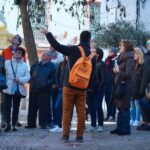
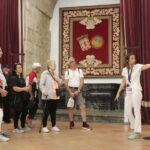
It’s also built for hearing and pacing. Audio receivers are included, and the group size tops out at 28, which keeps things moving while still allowing people to ask questions. The duration is about 3 to 4 hours, starting at 10:15 am, so you can still have the rest of the day for exploring.
If you’re visiting in heat, this can feel like a practical choice. Several of the monuments here involve substantial indoor time, which helps when the sun is relentless.
Other walking tours we've reviewed in Cordoba
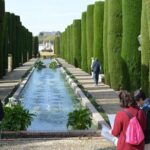

Alcázar de los Reyes Cristianos: Mudéjar Gardens and Royal Drama
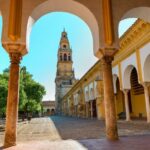
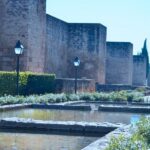
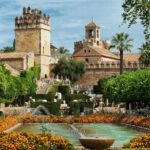
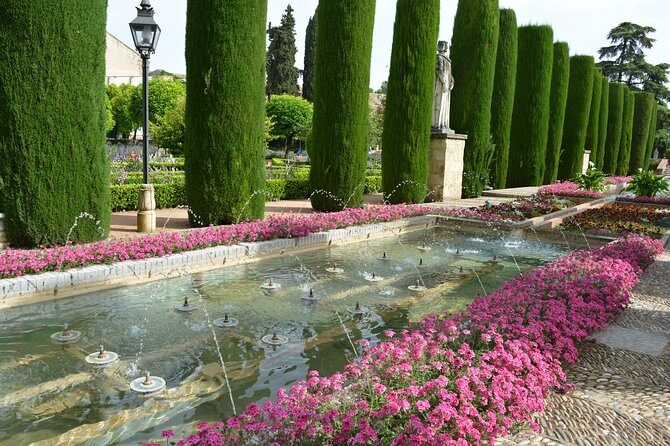
Your first major stop is the Alcázar de los Reyes Cristianos, a site with layers of life. It began as a palace and fortress, became tied to the reign of Isabella I of Castile and Fernando II of Aragon, later served as a prison, and is recognized as a Cultural Interest Heritage. It also forms part of the UNESCO listing tied to the city’s historic core.
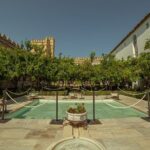
What I’d focus on here is the contrast: the exterior can feel sober, but the interior shifts into something more theatrical—courtyards and gardens with Mudéjar inspiration. That blend matters because it sets a tone for the rest of the tour: Cordoba’s story isn’t one straight line. It’s changes in power, religion, and art styles happening over centuries.
Even if you only have about an hour, you’ll get the point. The guide’s job is to steer you beyond pretty photos and explain why this palace-fortress format mattered, how it was used, and why Mudéjar design shows up in this context. If you like architecture, this stop gives you a foundation before you walk into the religious landmarks.
Practical note: this is an entry-ticket site included in your tour price. So you’re not juggling your phone, tickets, and directions right away.
Monument to the Lovers and La Judería Lane-Walking
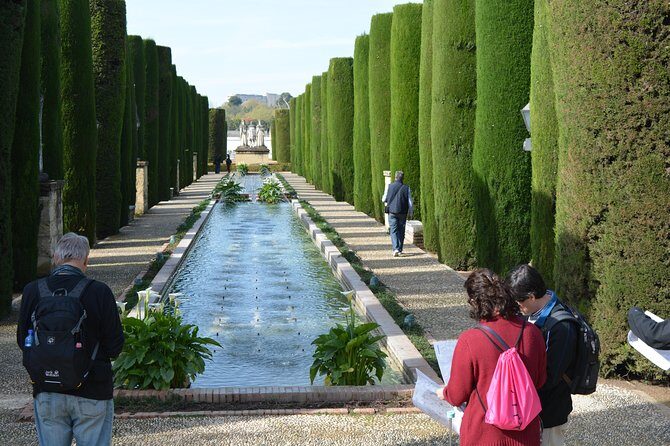
Right after the Alcázar, you make a quick cultural stop: the Monument to the Lovers. It honors Andalusian figures Ibn Zaydun and Wallada bint al-Mustakfi, with a statue that features two hands. It’s brief (minutes, not an hour), but it’s a nice “breather” moment—more human story than stone résumé.
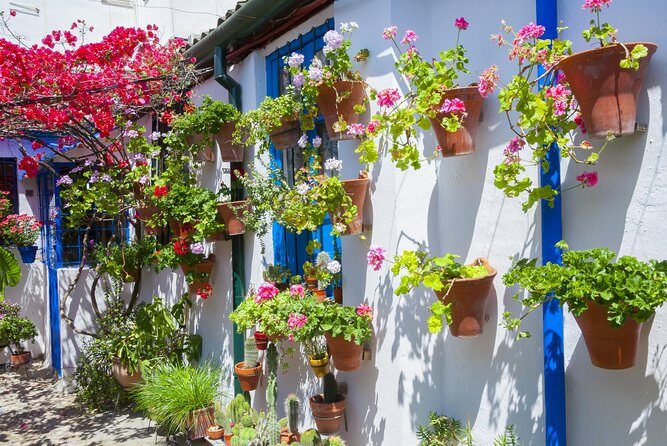
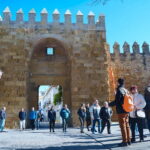
Then you shift into the atmosphere zone: La Judería, the network of small streets in Cordoba’s historic center near the Mezquita. This is the part where a guided tour earns its keep. Without context, it’s just a maze of alleys. With context, you start noticing why certain neighborhoods formed where they did and how the city’s religious communities shaped daily life.
On this kind of stop, I pay attention to how the guide frames the geography. You’re not just walking; you’re learning how Cordoba used to function. You’ll likely spend around 45 minutes in this area, which is enough to feel like you’ve entered the quarter rather than doing a drive-by.
If you enjoy photography, this is a good moment for it. The streets are intimate, and small changes in angle can make a big difference with light and textures.
The Córdoba Synagogue: Must-See, But Timing Matters
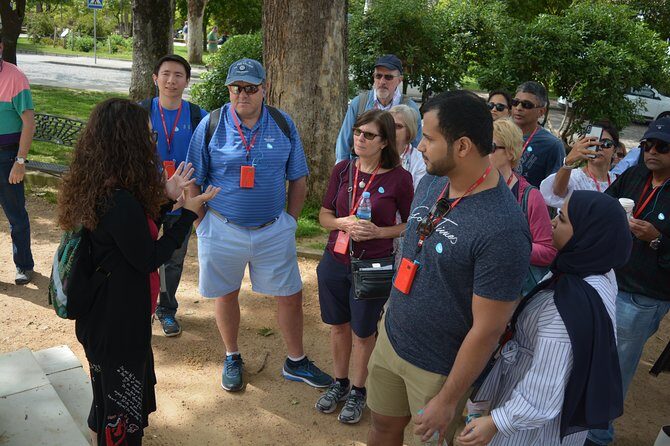
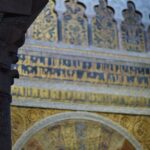
The highlight that many people plan their whole day around is the Córdoba Synagogue, built in 1315. It’s considered one of Spain’s best-preserved medieval synagogues, and it features beautiful Mudéjar-style decoration. Despite being small inside, it’s packed with meaning.
Here’s the reality check you should know up front: the synagogue is closed all day on Mondays and in the afternoons on Sundays and holidays. Even on open days, the narrow street leading to the entrance can create long lines, which can slow the group.
The tour plan accounts for that. If inside entry doesn’t work due to delays, the guide explains the monument from the outside instead. The inside visit itself is usually very short—about 5 minutes—because the building is compact and the tour is designed to cover multiple paid sites.
My advice: come ready for a quick, focused interior visit. Think of it as a doorway experience—short, intense, and historically grounded—rather than a “wander for 45 minutes” kind of stop.
Because the Synagogue ticket is included, you don’t have to figure it out on the spot. Still, if timing is tight in your own schedule, give yourself a buffer. Cordoba’s old streets can throw off exact minutes.
Maimonides and Al-Gafequi: The Medical and Thinking Legacy
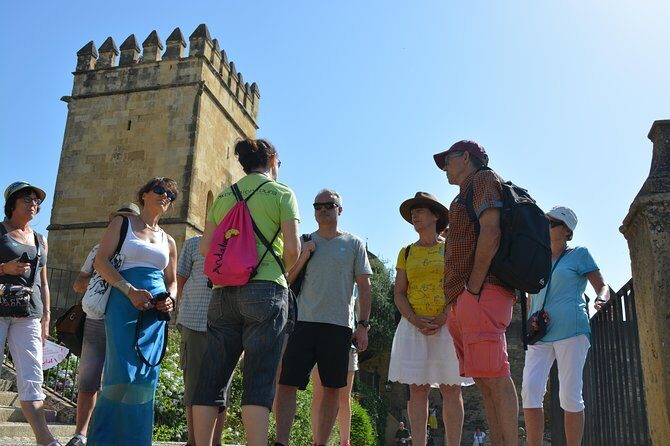
Between the Jewish Quarter sights, you also hit two short landmarks tied to thinkers and physicians:
- Estatua de Maimonides: This statue honors Moses Maimonides, the medieval philosopher and physician. The stop is only a couple of minutes, but it’s a strong reminder that Cordoba’s influence wasn’t limited to architecture or politics. It includes major contributions to thought and medicine.
- Estatua a Mohamed Al-Gafequi: Al-Gafequi was an Andalusian physician born in Córdoba in 1126, known for ophthalmology. The tour frames his work around cataract surgery techniques and studies of eye anatomy and diseases.
These stops are short by design, but they matter. They prevent the tour from feeling like only stones and dates. You see people—how they worked, what they studied, and why Cordoba mattered across disciplines.
If you have any interest in how medieval scholarship connected to real-world medical practice, these quick statues can be a satisfying payoff.
A few more Cordoba tours and experiences worth a look
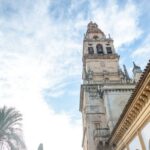

San Bartolomé Chapel and the Zoco: Art Forms You Can Touch
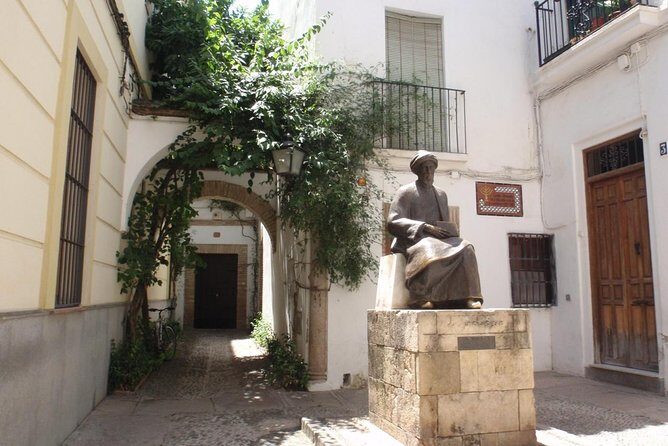
Not every stop is a big “wow wall.” Some are smaller, and that’s the point.
You’ll briefly visit the Capilla Mudejar de San Bartolome, dating to the 14th century. It’s known for intricate Mudéjar architecture, and its location in the old quarter helps it feel like part of the neighborhood fabric rather than a standalone attraction.
Then there’s a cultural reset at Zoco Municipal De Artesania, a municipal souk housed in a 16th-century mansion that was formerly owned by the Armenta family. This is where you get a sense of what local crafts look like up close—Cordoban leather, filigree silverwork, and ceramics.
Sometimes there’s even a guitar player, which can make the atmosphere more lively without turning it into a theme park. The stop is brief (a handful of minutes), so don’t expect a full shopping session. Treat it like a taste-test: look, notice materials and craftsmanship, and if something catches your eye, plan to come back later.
For me, this part balances the tour. You’re not only learning about Cordoba; you’re also seeing what the city produces and values today.
Faculty of Philosophy and Letters: When a Hospital Becomes a Campus
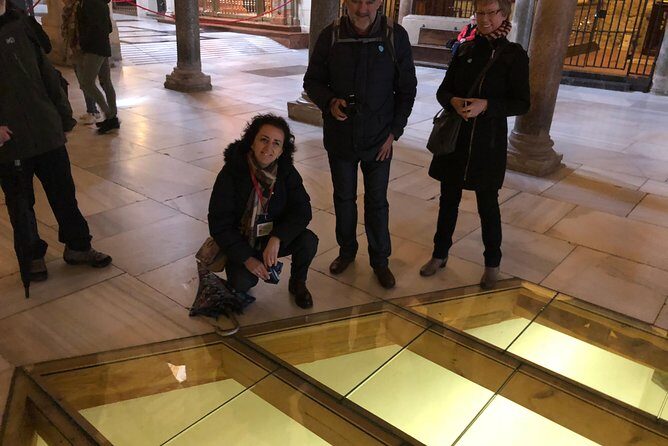
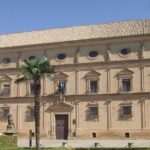
The Faculty of Philosophy and Letters stop is quick, but it’s an interesting one: the building used to be the Hospital del Cardenal Salazar. Over time, it transitioned from a medical institution into higher education.
The tour explains the timeline: a university college starting in 1971 under the University of Seville, then becoming part of the newly formed University of Córdoba in 1973. Expansions and renovations in the 1990s added new academic programs like Art History, Humanities, and later Translation and Interpretation.
Even with a short stop, this is a good reminder that historic buildings don’t freeze in time. They keep changing roles, while retaining their bones. If you like seeing how old architecture stays useful, this is a neat moment in the middle of the monument-heavy schedule.
Mezquita-Catedral de Córdoba: Why This One Hour Changes Everything
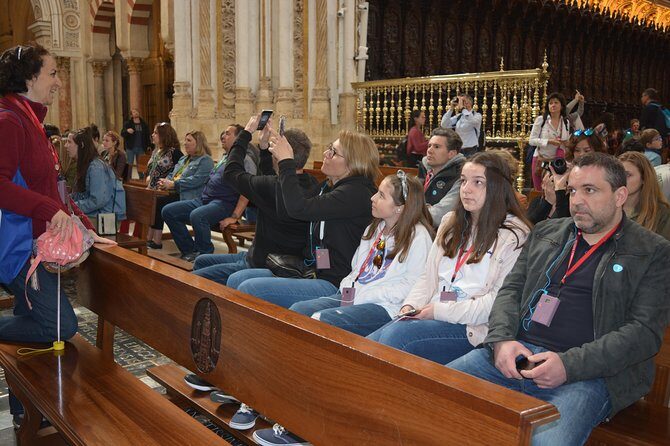
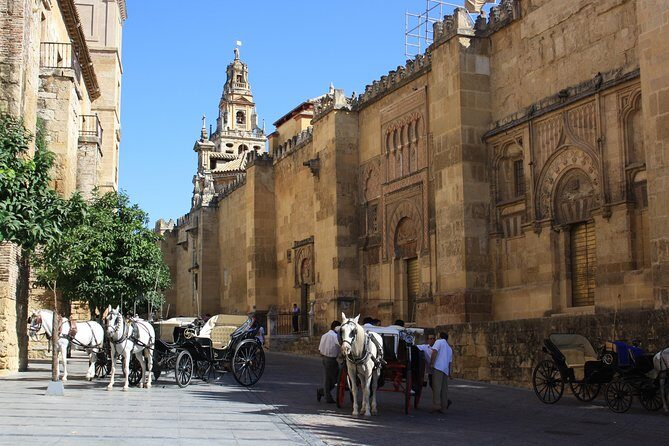
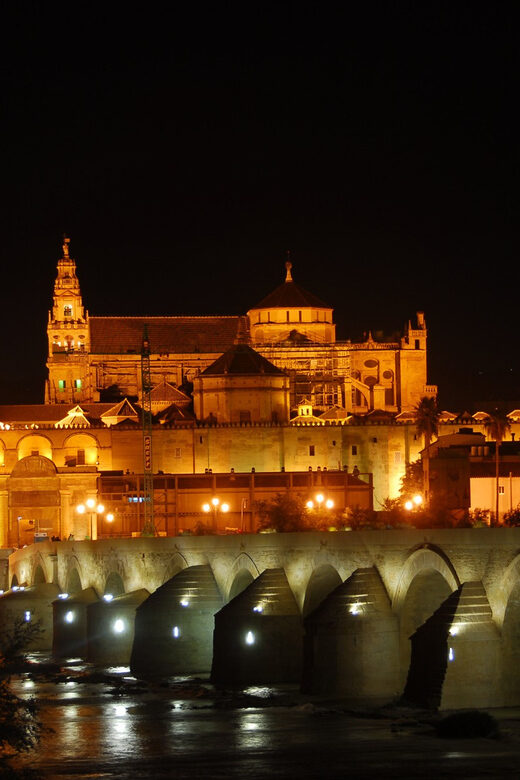
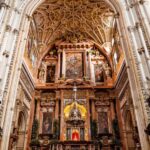
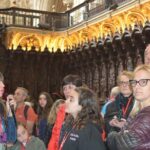
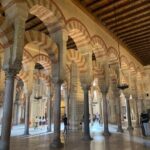
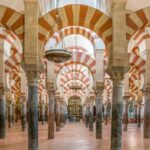
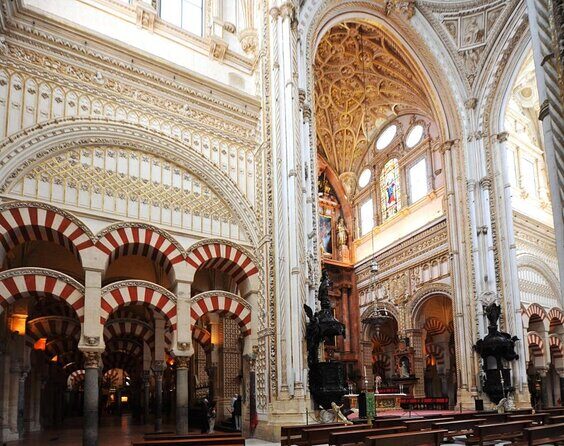
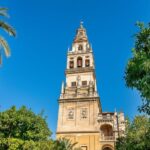
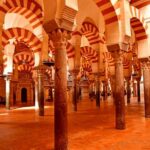
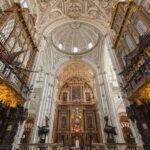
The final big anchor is the Mezquita-Catedral de Córdoba. The tour frames its transformation in stages: first a Visigoth basilica (San Vicente), then a mosque, then a Christian cathedral. It’s one of those buildings that’s hard to summarize with a sentence, and that’s exactly why a guide helps here.
You’ll spend about an hour at this stop, with the tour designed to end inside the Monumental Site. That’s a big practical advantage. You can linger without re-orienting yourself for another entrance or another ticket plan, and it’s easier to stay for photos as long as you want.
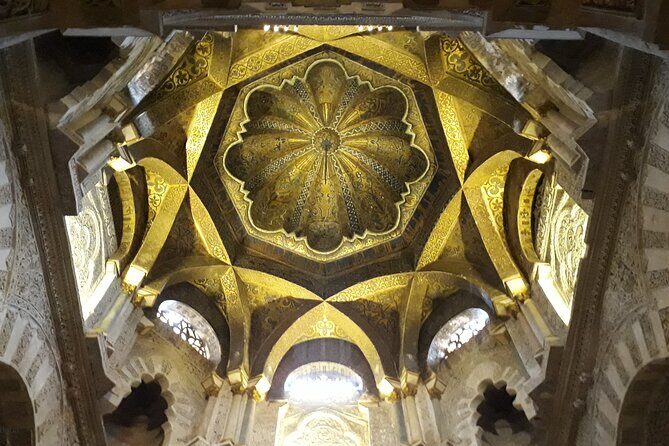
Also, audio receivers matter here more than you might expect. The Mezquita-Cathedral is visually overwhelming, and if you can’t hear your guide, you miss the connections: how the design reflects different periods, and how earlier parts of the tour (Alcázar, La Judería, synagogue context) shape what you notice in the Mezquita itself.
When people say this place is the top attraction in Córdoba, it’s not exaggeration. The architecture is the star, but the guide’s explanation makes it easier to read like a story rather than a maze.
Price and Logistics: What $66.54 Really Buys
At $66.54 per person, this is a value play if you were going to visit these sites anyway. You’re paying for three included paid entries (Alcázar, Synagogue, and the Mezquita-Cathedral), plus skip-the-line access, plus the guide and audio receivers.
That matters because Córdoba’s top attractions are not all free. And if you add up the time cost of buying tickets and lining up on your own, the economics start to make sense fast—especially during busy seasons.
The tour’s schedule also helps you avoid decision fatigue. You don’t have to build a day from scratch or guess which order makes the most sense. The structure—palace first, then neighborhood streets, then religious monuments—feels intentional.
Still, be realistic about timing. A tightly packed plan can face delays if lines form, especially around the Synagogue entrance. Some groups may also join along the way, which can create brief waiting moments. If you’re on a strict train schedule, I’d treat this as “good planning, but leave buffer time.”
Group size is capped at 28, which usually keeps it manageable. And since it’s in English and near public transportation, it’s easier to fit into a larger Córdoba or Andalucía plan.
Who This Tour Suits Best (and Who Might Not Love It)
This tour suits you if you want to see the big Cordoba monuments with minimal hassle and you like historical context as you move. It’s also a good fit for families, because the pacing and short stops help keep attention while still covering the key landmarks.
It’s especially good for people who get frustrated with self-guided visits where you see a site and still feel like you missed the point. With a guide and audio support, you’re more likely to understand what you’re looking at in each place.
I’d think twice if you’re the type who wants long, unstructured time inside every monument. The Synagogue interior is particularly short, and several stops are only a couple of minutes. If you want deep time for the Mezquita-Cathedral alone, you’ll get some extra room by ending inside, but the rest of the tour remains efficient.
Also, if you’re visiting on a Monday, the Synagogue won’t be accessible during the day because it’s closed. The tour adjusts by explaining outside if needed, but that changes the experience.
Should You Book This Cordoba Monuments Intensive Tour?
Yes, I’d book it if you want a guided route that hits the Alcázar, La Judería, the Synagogue, and the Mezquita-Cathedral without spending your day figuring out logistics. The included tickets, skip-the-line approach, and audio receivers are a strong combination for the price.
Book with a time-buffer mindset. Córdoba’s narrow lanes and popular entries can create delays, and the Synagogue has predictable closure windows. If your schedule is tight, plan to travel with slack—especially if you really care about maximizing time inside the Synagogue.
If you’re a history-and-architecture person, you’ll probably love the flow: palace power, neighborhood identity, religious transformation, and finally the Mezquita-Cathedral as the architectural “center of gravity.” And if you end up with extra time at the end, that’s the perfect moment to linger.
FAQ
How long is the Cordoba monuments intensive tour?
It runs about 3 to 4 hours.
Is the tour offered in English?
Yes, it is offered in English.
What’s included in the ticket price?
The price includes tickets for the Alcázar de los Reyes Cristianos, the Córdoba Synagogue, and the Mosque-Cathedral, along with audio receivers, skip-the-line entry, and a high qualified local official guide.
Where does the tour start and end?
It starts at Av. del Alcázar, 170, Centro, 14004 Córdoba, Spain. It ends at the Mosque-Cathedral Monumental Site of Córdoba, C. Cardenal Herrero, º 1, Centro, 14003 Córdoba, Spain.
What happens if the group can’t enter the Synagogue?
The tour will try to visit the synagogue whenever possible. If long lines cause delays or if it’s closed, the guide explains the monument from the outside instead. The inside visit is usually very short (about 5 minutes) when entry is possible.
When is the Córdoba Synagogue closed?
It’s closed all day on Mondays, and it is closed in the afternoons on Sundays and holidays.
How many people are in the tour?
The maximum group size is 28 travelers.
What is the cancellation policy?
Free cancellation is available up to 24 hours in advance for a full refund.