REVIEW · CORDOBA
City Sightseeing Cordoba Hop-On Hop-Off Bus Tour
Book on Viator →Operated by City Sightseeing Ltd - Europe · Bookable on Viator
Cordoba from a double-decker is a smart shortcut. This City Sightseeing hop-on hop-off loop gives you an easy first pass over the sights—then you choose what to revisit on foot, with onboard English audio as you roll past major landmarks.
I especially like the audio commentary with headphones, because it turns what you see into context fast. I also like the two-route setup (the Red panoramic route and the Blue minibus route), which helps you cover more angles without feeling stuck to one side of town.
The main thing to watch is the wait time: buses run about every 70 minutes, so hopping off for a quick look can turn into a longer stop than you planned.
In This Review
- Key takeaways before you board
- Cordoba hop-on hop-off in plain terms: what you’re really buying
- Red Line vs Blue Line: which loop fits your day
- Where to start (Av. Fray Albino) and why timing matters
- Major sights you’ll spot from the top deck
- Red Line stop-by-stop: from Botanic Gardens to the Mosque area
- Blue Line stop-by-stop: shorter rides, different angles
- Judería walking tour at 6pm: the best built-in add-on
- Audio commentary, headphones, and staying oriented
- Price and value: is $32.44 fair for what you get?
- Who this tour suits best
- A few smart planning moves (so the day goes your way)
- Should you book this Cordoba hop-on hop-off bus tour?
- FAQ
- How long is the Red Line and Blue Line?
- When do the buses run?
- How often do buses depart?
- What’s included with the ticket?
- Where does the Judería walking tour start, and what time is it?
- Can I use a mobile ticket or paper voucher?
- Is food included?
Key takeaways before you board
- Two route lengths, two rhythms: Red is about 70 minutes; Blue is about 30, but both follow a wider schedule.
- 24-hour hop-on hop-off pass: one ticket covers a full day of looping and reboarding.
- Included Judería walking tour at 6pm: start from Puente Romano and get a structured evening plan.
- Big Cordoba hits on the route: the Mezquita-Mosque area, the Roman Bridge, the Alcázar, and more.
- Long gaps between buses: plan for waits if you’re hopping frequently.
Cordoba hop-on hop-off in plain terms: what you’re really buying
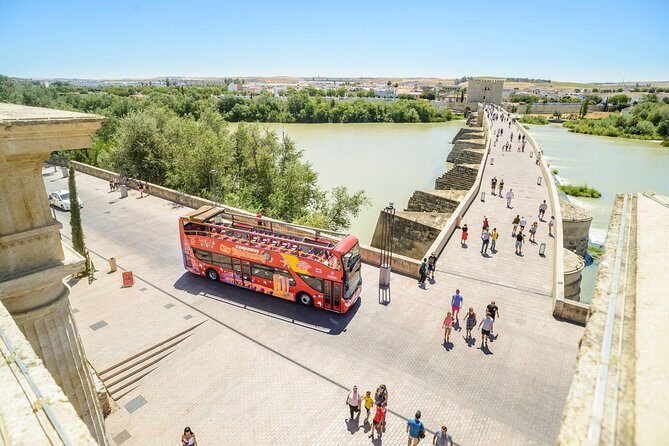
This tour is built for the day-one problem: you arrive in Cordoba, you want the main sights, but you don’t want to guess streets and directions all day. The double-decker (Red Line) and the smaller minibus (Blue Line) give you a moving map, plus narration in English, so you can understand what you’re seeing without constantly stopping to read plaques.
You also get flexibility that’s actually useful. You can stay on the bus for the full loop if you’d rather let the city come to you, or jump off to walk around specific areas like the Old Town core and the Jewish Quarter zone.
The value piece comes from how much you can cover in 1 hour-ish of rolling time. At $32.44, the win is less about “one perfect stop” and more about getting your bearings, then building an efficient walking plan from there.
Other hop-on hop-off bus tours in Cordoba

Red Line vs Blue Line: which loop fits your day
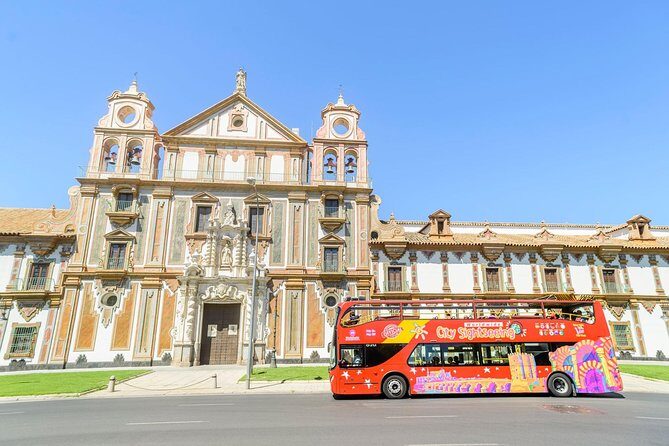
Think of the Red Line as your main sightseeing loop. It’s the panoramic route on the double-decker bus, designed for seeing more at once, especially if you want top-deck views. It’s listed at about 70 minutes, starting at 9:30am from Av. Fray Albino, 2, with the last departure at 6pm.
The Blue Line is the Intima Route on a minibus. It’s shorter—about 30 minutes—which can be a nice option if you want to repeat a few areas you care about, or if you want a quicker circuit to connect dots for later walking.
Here’s the practical catch: even though Blue is shorter, departures still follow a spaced schedule. So if you hop off and assume the next bus will show up in 5–10 minutes, you’ll be disappointed.
Where to start (Av. Fray Albino) and why timing matters
Your starting point is Av. Fray Albino, 2. The buses run daily from 9:30am to 6:00pm. Departures are spaced at roughly every 70 minutes, so the route works best when you treat it like a loop you join, rather than a streetcar you keep catching every few minutes.
In hot weather, start earlier than you think you need to. Cordoba can feel intense in the middle of the day, and the bus is one of the easiest ways to keep moving while you still get views. A common strategy is to do your bus loop before lunch, then switch to walking once the light and temperature feel more manageable.
Also, keep your plan simple around reboarding. If you want several stops in the same area, cluster your walking so you’re not sprinting back to a stop that only serves the route occasionally.
Major sights you’ll spot from the top deck
The big payoff of this route is seeing Cordoba’s headline monuments in one pass. On the double-decker, the sit-up-and-look format really works. You’ll cruise through sunlit stretches of the historic core, with narration helping you understand what the architecture is and why people care.
The route places you near the most famous “wow” moments, including:
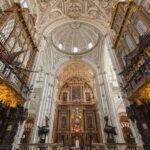
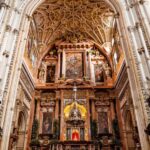
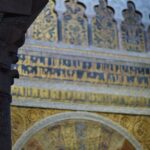
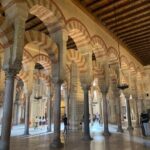
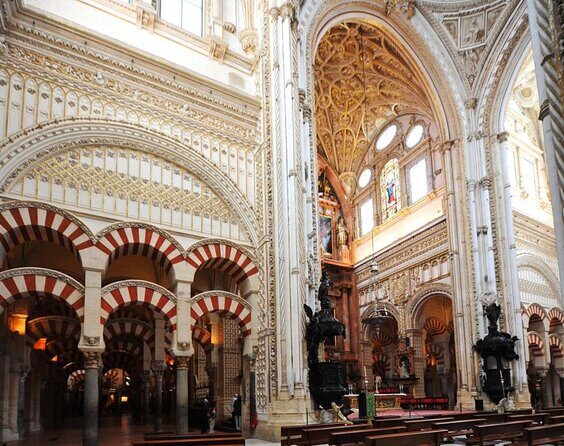
- The Mezquita-Mosque-Cathedral zone, where you’ll get the classic view of the candy-cane columns and the dramatic domes.
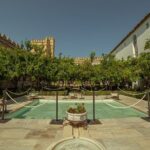
- Alcázar de los Reyes Cristianos, a major stop for palace-and-gardens atmosphere.
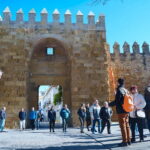
- Puente Romano (Roman Bridge), a key landmark stop that anchors Old Town walking routes.
The Roman Bridge stop matters even if you don’t do anything else, because it’s also the departure point for the included evening Juderia walking tour.
Red Line stop-by-stop: from Botanic Gardens to the Mosque area
Below is the Red Line flow, in the order of the stops you’ll pass. I’m focusing on what each stop is useful for and where you might want to think twice.
Stop 1: Av. Fray Albino, 2
This is your launch pad. Plan to be ready a few minutes early so you don’t miss the easier boarding window.
Stop 2: Real Jardín Botánico de Córdoba
Good if you want a calmer break or a garden-related walk. If you’re trying to see the core fast, you might skip this unless gardens are a priority.
Stop 3: La Ciudad de los Niños
A family-friendly sounding stop name. It’s likely most useful if you’re traveling with kids or you want a different pace from the monument circuit.
Stop 4: San Basilio
A neighborhood-area stop. Use it to get on/off for local streets and viewpoints, but don’t expect a single “must-see” from the bus alone.
Stop 5: Puerta de Almodóvar
A strong historical gate stop. Gates are often surrounded by walkable streets, so it’s a good option if you like wandering between photo angles.
Stop 6: Mercado Victoria
A practical stop if you want to check out the market atmosphere. Even when you’re not buying food, market areas help you understand everyday Cordoba beyond the monuments.
Stop 7: Gran Capitán
A central-feeling stop. It’s useful when you want to reposition for later walking and you don’t want to rely on taxis.
Stop 8: Córdoba Train Station
This is a huge convenience stop if you’re arriving or leaving by train. One caution: don’t assume the stop will be obvious. Give yourself time to find the exact pickup point at the station so you don’t lose your spot.
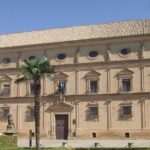
Stop 9: Palacio de la Merced
A palace stop—best for photo interest and a quick orientation. If you want inside access, you’ll need to plan that as a separate activity since the bus itself doesn’t include attraction entries.
Stop 10: Torre de la Malmuerta
A tower stop for history-minded sightseeing. It’s worth using for a pause and a photo, especially if you’re doing the loop without jumping off much.
Stop 11: Marrubial (Puerta Plasencia)
Another gate-style stop name. These work well for short hops and street-level wandering, but again, don’t over-stack your hop-offs.
Stop 12: San Lorenzo
Another neighborhood stop that’s best for context and walking connections. If you’re tight on time, you can treat it as an “on map” location rather than a must-do.
Stop 13: Calle Realejo
Useful for getting into the Realejo area on foot. If your goal includes Jewish Quarter-style streets later, this is one of the stop names to pay attention to for positioning.
Stop 14: Ayuntamiento de Córdoba
Town hall area stop. This tends to be good for orientation in the city center, and it’s often close to walkable connections.
Stop 15: Arco del Portillo
An arch stop. Arches are great for quick photos and for understanding the city’s medieval layers without needing extra tickets.
Stop 16: Roman Bridge of Córdoba (Puente Romano)
This is one of the most important points on the Red route. It’s a major landmark and—critically—it’s where the included evening Judería walking tour starts at 6pm.
Stop 17: Baños del Alcázar Califal
This stop is near the Alcázar complex area. Even if you don’t go inside, it’s a helpful positioning stop if your later plans include that general zone.
After that, the route continues:
- Stop 1 (listed again): Alcázar de los Reyes Cristianos: palace grounds and major sights by the bus route.
- Mosque-Cathedral Monumental Site of Córdoba: the signature “you’re really here” moment. Expect a short stop area experience and a strong reason to plan separate time if you want to go in.
- San Pedro, Realejo, and Palacio De Viana: more “walk from the stop into the streets” opportunities, especially if you like Old Town residential palaces.
- Templo Romano: Roman-era stop name; good for context even if you don’t plan a long stop.
- Plaza de las Tendillas and Avenida Fray Albino: closing the loop with an easy re-entry point and city-center orientation.
Practical Red Line drawback to watch: with buses spaced widely, jumping off at too many stops can turn into waiting around. If your goal is to cover the Mosque area and the Old Town, do those with intent, then walk between nearby zones rather than hopping repeatedly.
Other city tours we've reviewed in Cordoba


Blue Line stop-by-stop: shorter rides, different angles
The Blue Line is about 30 minutes per loop, and it uses a minibus. That can feel less “tour bus” and more like a targeted city connector. Still, the big issue remains the same: the schedule is not frequent.
One note for planning: Stop 3 on the Blue Line (La Ciudad de los Niños) will be out of use from 12th–26th January.
The Blue route includes several of the same major names, plus some variations that can help you connect neighborhoods without doubling back:
- Av. Fray Albino, 2 (starting point again)
- Mosque-Cathedral Monumental Site of Córdoba (the signature stop)
- San Pedro and Realejo (useful for Old Town repositioning)
- Palacio de Viana and Palacio de la Merced (palace stops for photo-and-orientation)
- Templo Romano (Roman context stop)
- Plaza de las Tendillas and Arco del Portillo (center-city landmarks and quick photo points)
Where Blue can be a smart move: if Red feels like it skips “the exact side of town you want,” Blue gives you a different mini-circuit to align your later walks.
Where Blue can frustrate you: if you’re expecting faster hop-on hop-off freedom, remember the buses still follow a spaced schedule, so you’ll need to commit to your timing.
Judería walking tour at 6pm: the best built-in add-on
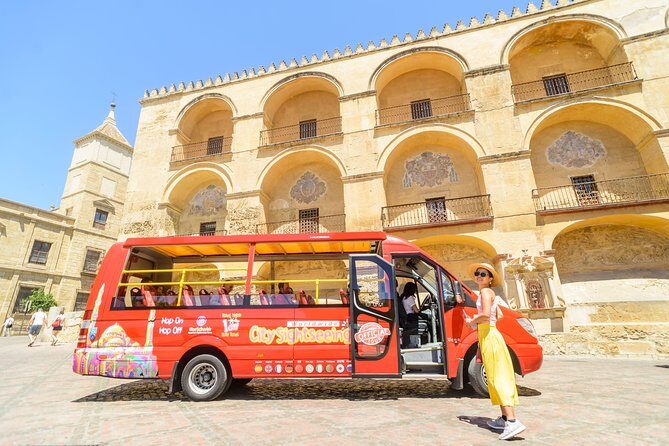
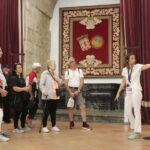
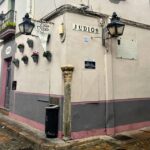
This tour is more than a moving bus loop. You also get an included walking tour focused on the Judería (Jewish Quarter).
It starts at 6pm from Stop 16: Puente Romano on the Panoramica (Red) route. Duration is 1 hour, and it’s available in English and Spanish.
If you want an authentic-feeling slice of Cordoba beyond monuments, this evening slot is a nice way to turn bus stops into real street walking. Also, the timing is perfect if you’ve already done your main daytime loop and just want a guided plan before dinner.
Tip for pacing: don’t hop off for tiny “maybe” stops late in the afternoon. Save your energy and logistics for that 6pm meeting point so you don’t arrive looking for the group.
Audio commentary, headphones, and staying oriented
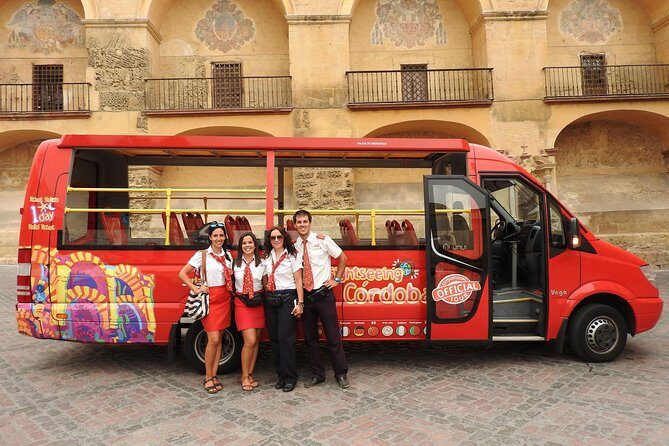
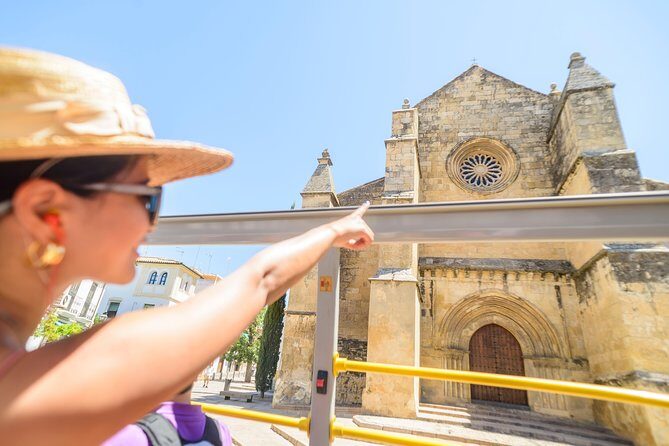
You’ll have multilingual audio tour commentary + headphones as part of the experience. That matters because Cordoba is dense. Without audio, it’s easy to see beautiful buildings but not connect them to what they represent.
A couple practical points to keep the audio working for you:
- If the sound seems weak, check your headphone fit right away.
- If you notice audio isn’t clearly matching what’s outside your window, it helps to look for large landmark cues first (like the bridge, the cathedral area, or the Alcázar zone).
Some days run smoothly; other days can have technical gremlins. Keep a small buffer mindset. You’re paying for convenience and context, not a studio-grade production.
Price and value: is $32.44 fair for what you get?
At $32.44 per person, this isn’t the cheapest way to see Cordoba. It is, however, a straightforward way to compress decision-making.
Here’s how I’d judge the value:
- If you’re short on time, the bus gives you a quick, structured overview that helps you choose what to do next.
- If you plan to walk afterward, the stop choices are designed to help you re-enter the city’s key zones efficiently.
- The discount booklet can be meaningful if you use it for local attractions you were already considering. It’s not guaranteed to cover everything, but it can lower the sting of separate tickets.
The only “value leak” comes from waiting. If you hop off repeatedly expecting frequent buses, the schedule spacing can make the experience feel less efficient than the idea of hop-on hop-off suggests. Treat it like a loop service with reboarding, not like a train that passes every few minutes.
Who this tour suits best
This works best for:
- First-time visitors who want a fast city overview without committing to a single guided walking route all day.
- People who prefer a flexible plan—ride now, decide later.
- Travelers who enjoy learning as they go, thanks to the English audio and the stop-based sight context.
It’s less ideal if:
- You hate waiting around and you want very frequent reboarding.
- You plan to do long, separate activities at multiple far-apart stops on the same loop.
- Your day depends on the bus arriving at exact times repeatedly (the buses are spaced).
A few smart planning moves (so the day goes your way)
Use these to make the most of your time:
- Do the main sights earlier in the day if you can, especially in summer heat.
- Cluster your walking around a few key stops, not every stop you pass.
- Keep your phone ticket info handy, but also be ready with a paper voucher if your device has issues.
- If you’re starting near the train station, allow extra time to confirm the exact pickup spot.
These are the difference-makers between “easy city day” and “why isn’t it here yet?”
Should you book this Cordoba hop-on hop-off bus tour?
I’d book it if you want a practical first pass at Cordoba: top-deck views, English narration, two route options, and an included evening Judería walking tour at 6pm. It’s a good choice when you want to think less about logistics and more about deciding what to explore up close.
I’d pause before booking if you’re the type who needs very frequent bus service or you hate waiting. With buses running about every 70 minutes, you’ll get the best results by planning your hop-offs with the schedule in mind.
If you like the idea of using the bus to build your walking day—then this one makes sense.
FAQ
How long is the Red Line and Blue Line?
The Red Line panoramic route takes about 70 minutes. The Blue Line minibus route takes about 30 minutes.
When do the buses run?
Buses run daily from 9:30am to 6:00pm. The first departure is at 9:30am from Stop 1, and the last departure is at 6pm.
How often do buses depart?
Buses run every 70 minutes.
What’s included with the ticket?
You get a 24-hour bus pass, multilingual audio commentary with headphones, a discount booklet for local attractions, and an included Judería walking tour.
Where does the Judería walking tour start, and what time is it?
It starts at 6pm from Stop 16 at Puente Romano. The walking tour lasts 1 hour and is available in English and Spanish.
Can I use a mobile ticket or paper voucher?
Yes. Mobile and paper vouchers are accepted, and you can redeem them at any of the stops along the route.
Is food included?
No. Food and drinks are not included.