REVIEW · CORDOBA
City of Caliphs: A Self-Guided Walking Tour of Córdoba’s History
Book on Viator →Operated by VoiceMap Audio Tours · Bookable on Viator
Córdoba can feel like a blur of courtyards and monuments, but this route turns it into a clear story. I like the step-by-step audio structure (you get specific stops in a smart order) and the fact it’s designed for easy stop/starts with GPS help. One drawback to plan for: if you want to jump in mid-tour, the app start points can be a little fussy, and returning to the map while you’re photographing takes some patience.
This is a self-guided walking tour called City of Caliphs: A Self-Guided Walking Tour of Córdoba’s History, in English, priced at $11.99 per person and typically clocking in around 3 to 3.5 hours. You begin at the Torre de la Calahorra by the Roman Bridge area, and you finish right back where you started—handy when you’ve worked up an appetite.
If you’re the kind of traveler who enjoys wandering, but hates guessing what you’re looking at, this is a practical way to get oriented fast. And with offline audio and maps in the app, you’re not stuck relying on data coverage the whole time.
In This Review
- Key highlights worth your attention
- Start at Torre de la Calahorra and the Puente Romano
- Mezquita-Cathedral viewpoint: the big idea in one look
- Crossing the Roman Bridge and spotting the Calahorra Tower
- Roman Temple stop: when Córdoba started long before the famous empires
- Courtyards in full view: patios, oranges, and the quiet magic
- Calleja de las Flores: a postcard lane that still teaches something
- San Basilio streets: whitewashed walls and winding lanes
- Episcopal Palace: power made visible in stone
- Historic Córdoba Synagogue: a rare, important chapter
- House of Sefarad: seeing Sephardic culture through a museum lens
- Casa Andalusí: a restored medieval house you can actually feel
- Caliphal Baths: Arab bath architecture and tilework
- Castle of the Christian Monarchs: from Caliphal palace to later power
- Royal Stables: where Andalusian horses have mattered for centuries
- Bell Tower and the sound of the old center
- Optional Archaeological Museum: only if you want more artifacts
- Plaza del Potro, Plaza de la Corredera, and Plaza de las Tendillas
- Mudéjar clue: Saint Bartholomew Chapel
- How long it really takes (and how to pace it)
- What you actually get for $11.99
- One thing to watch: starting mid-route and map switching
- Should you book this Córdoba audio walk?
- FAQ
- How long does the self-guided tour take?
- What is the price per person?
- Where do I start, and where do I end?
- Is the tour available in English?
- Do I need a smartphone and headphones?
- Does it work offline?
- Is transportation included?
- What times is the tour available?
- Is there free cancellation?
- Does the tour help me get back on track if I wander?
Key highlights worth your attention
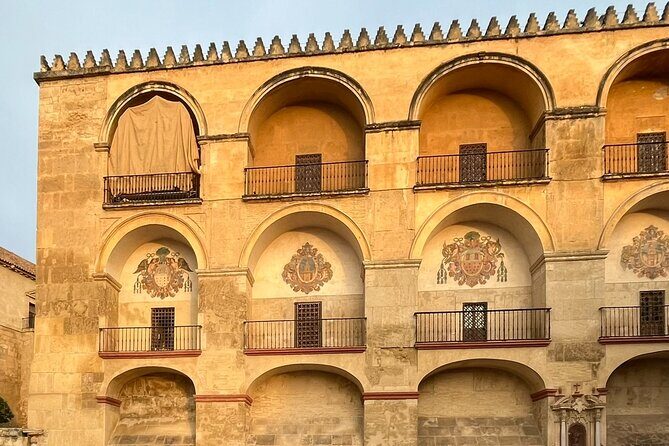
Precise stop-by-stop route
Each point is framed as a real place in Córdoba—so you’re not just listening, you’re moving through the story.
GPS that helps you stay on track
If you drift, the navigation is designed to bring you back to the path.
Patios, courtyards, and small lanes
You get the pretty stuff (Calleja de las Flores, patios) without it feeling random.
Cross-currents of Córdoba: Roman, Islamic, Christian, and Jewish
The itinerary touches major eras in a way that’s easy to follow on foot.
Offline ready
Audio, maps, and geodata are available without a signal once downloaded.
Start at Torre de la Calahorra and the Puente Romano
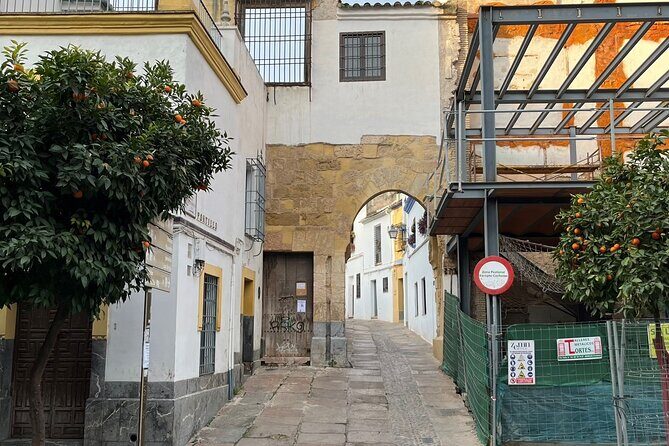
You begin at Torre de la Calahorra at Puente Romano, which is a smart starting choice. You’re at the edge of the old center, right where the Roman Bridge and the river views make sense, and where defensive-era Córdoba meets later eras.
From the start, the tour’s pace is built for walking and looking. The audio keeps you anchored to what you’re seeing instead of letting you wander into streets without context. If you like to take breaks, this one supports that: you can pause and come back without losing the thread.
Practical note: the tour does not include a smartphone or headphones. So budget for bringing your own phone (with enough battery) plus wired or Bluetooth headphones. The good news is the tour supplies offline audio and maps through the app.
Other walking tours we've reviewed in Cordoba
Mezquita-Cathedral viewpoint: the big idea in one look
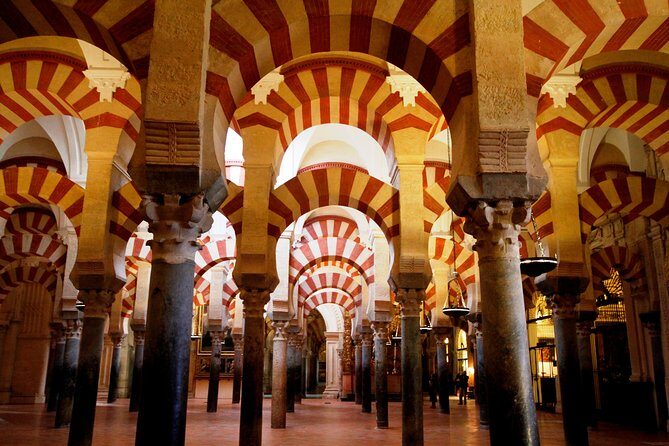
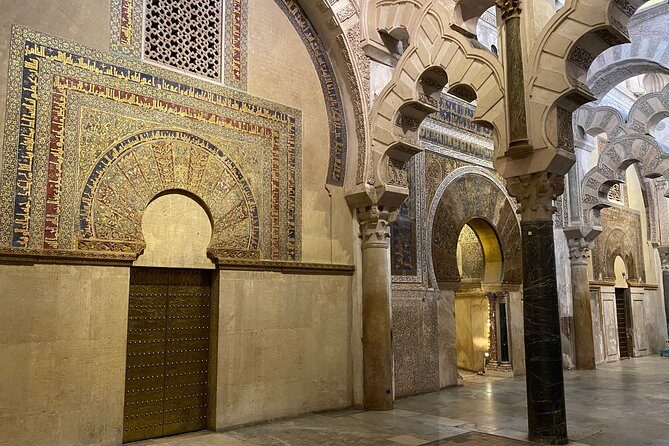
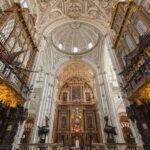
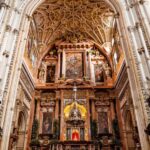
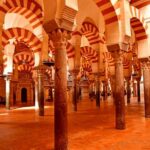
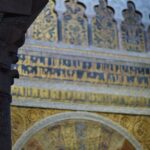
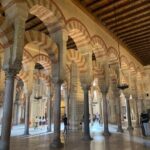
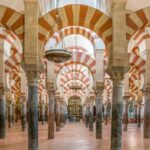
One of your first payoffs is the Mirador Mezquita de Córdoba, where you take in the Mosque-Cathedral of Córdoba—also known as the Mezquita-Catedral. This is where Córdoba’s layered identity becomes obvious fast.
You’re not just seeing a famous monument; you’re learning why it matters. The audio frames the building as a blend of Islamic and Christian influences, so you understand the “why” behind the visual mix: architecture that reflects changing power, faith, and style over time.
What I like about this approach: you get the main landmark early, which makes every later stop feel connected. When you later hear about Christian rulers or the Jewish quarter, it’s easier to keep Córdoba as one coherent place rather than separate attractions.
Crossing the Roman Bridge and spotting the Calahorra Tower
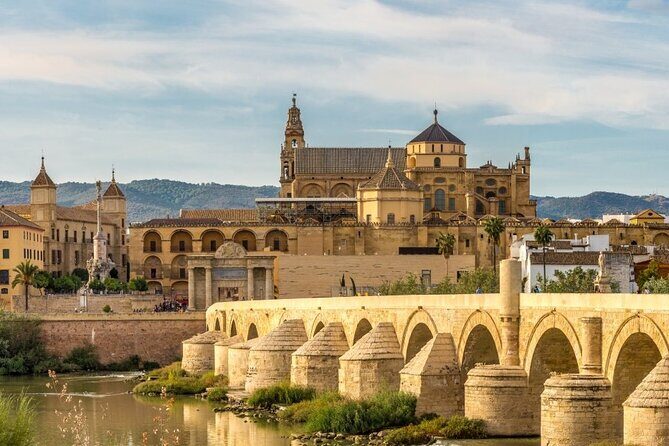
Next, you cross the Roman Bridge of Córdoba and get views over the Guadalquivir River. It’s the kind of setting that helps your imagination do its job—because it’s hard not to think about centuries of crossings when you’re literally walking the structure.
Along the way, you pass the Calahorra Tower, a historic landmark tied to the bridge’s defense. The tone here is practical: you’re learning what this tower and position were for, not just admiring it as a pretty wall.
One thing to watch: the bridge section can be busy, and it’s also a good place for photos. If you stop often to shoot pictures, plan a slower pace and give the app a moment to re-sync with your location before you try to change screens.
Roman Temple stop: when Córdoba started long before the famous empires
The Roman Temple stop gives you a clearer sense of Córdoba as an older Roman city, not just a medieval headline. You’re guided through remnants of the Roman past and prompted to visualize what the area would have meant when Roman civilization was in full swing.
This is a useful balance point in the tour. After you’ve seen the Mosque-Cathedral, the Roman stop acts like a reminder that Córdoba didn’t begin with Islam or Christianity. The city has always been a crossroads, and the tour uses that idea to keep your understanding layered instead of one-note.
Courtyards in full view: patios, oranges, and the quiet magic
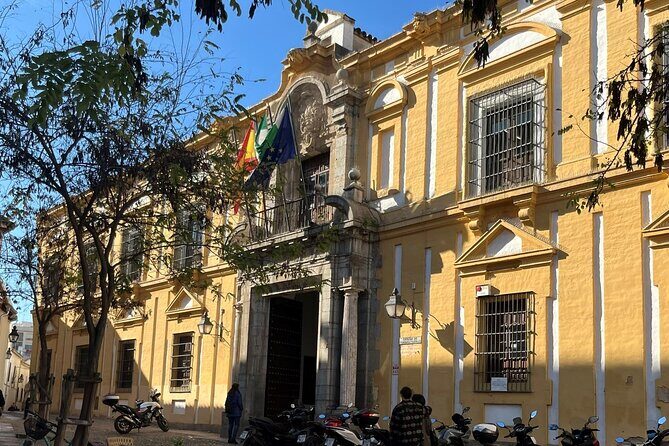
Then the route shifts into Córdoba’s courtyard culture—one of the reasons people fall in love with this city.
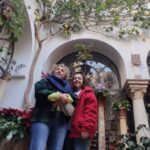
You’ll find the patios along the way, with those traditional Cordoban courtyards known for colors and fragrant blooms. This stop helps you understand why locals value these spaces as part of their identity. It’s not just about pretty plants; it’s about how architecture, water, and daily life connect.
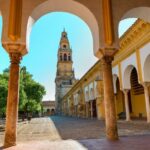
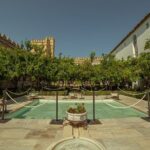
After that, you reach the Orange Tree Courtyard, described as a calm oasis within the Mosque-Cathedral area. The audio emphasizes its symmetry and the citrus trees. Even if you’re not the type who lingers in quiet places, this is a smart breather. It gives your feet a rest while your brain absorbs the idea of how spaces were designed for shade, air, and rhythm.
Other walking tours we've reviewed in Cordoba

Calleja de las Flores: a postcard lane that still teaches something
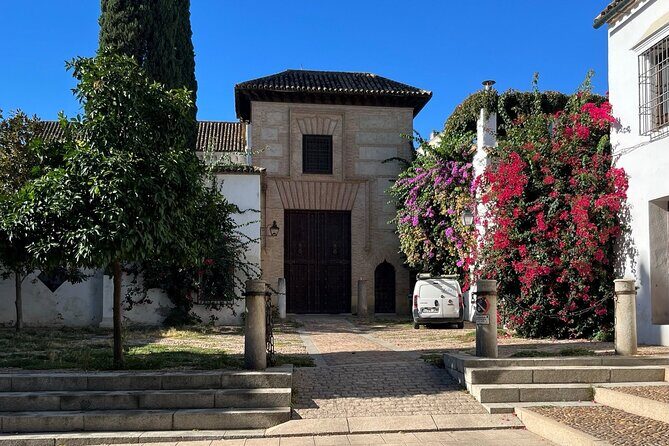
Stroll through the Calleja de las Flores, one of those narrow alleys where flowers and charming building facades pull you along. This isn’t only a photo stop. The audio approach makes it feel like part of the city’s lived-in character, not just a background for selfies.
If you want a tip for getting the most out of it: slow down at the ends of the lane. The light changes quickly in Córdoba’s old streets, and it’s often the corners—not the middle—that give you the best sense of the architecture.
San Basilio streets: whitewashed walls and winding lanes
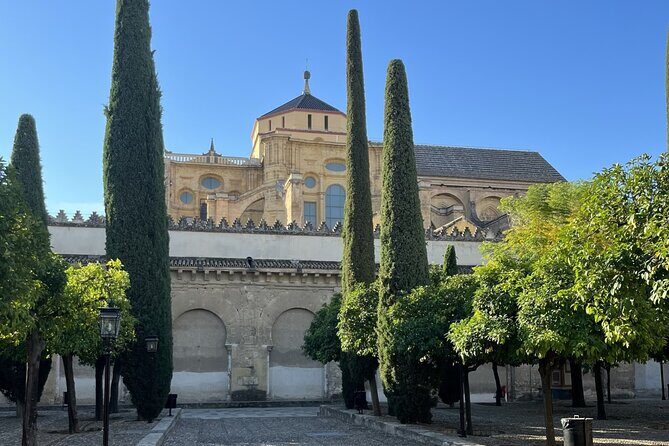
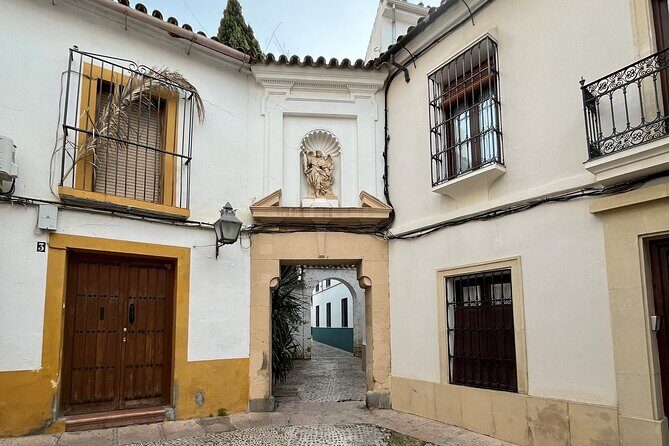
Next comes San Basilio, a historic district known for winding streets and whitewashed buildings. This part of the tour is about movement and atmosphere. You’re not staring at one monument the whole time; you’re learning how the neighborhood feels and how it works as a maze-like set of alleys.
This is where a self-guided audio route can shine, because the narration can keep you oriented even when the street turns feel endless. If you like wandering without getting lost, this stop is built for you.
Episcopal Palace: power made visible in stone
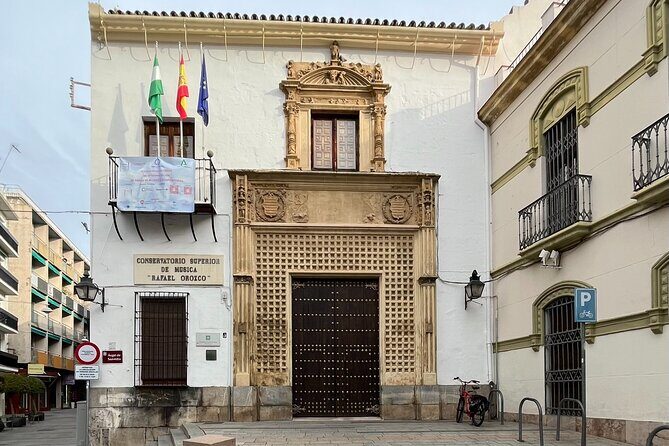
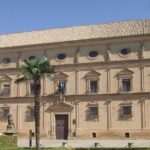
You’ll then reach the Episcopal Palace. The audio frames it as an architectural gem connected to ecclesiastical power. This is the kind of stop where the details matter—doorways, forms, and ornamentation all act like evidence of how authority wanted to appear.
The practical value here is simple: you’re learning what you’re looking at while you’re still in place. That makes the palace more meaningful than if you just walked past it on your own and guessed based on a guidebook sentence.
Historic Córdoba Synagogue: a rare, important chapter
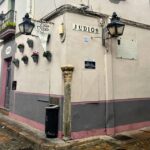
The route includes the historic Córdoba Synagogue, tied to the city’s multicultural heritage. It’s positioned as a place where you can explore architecture connected to Jewish history in Córdoba.
Even if you don’t know much at the start, the narration helps you understand role and context. This stop tends to stick with people because it’s not just about beauty—it’s about memory and continuity.
House of Sefarad: seeing Sephardic culture through a museum lens
After the synagogue, you move to the House of Sefarad, a museum dedicated to preserving Sephardic legacy. This is where the tour shifts from street-level sights to a more interpretive setting.
For me, this is one of the best ways to use a self-guided format: you get guided context at the museum without needing to line up for a separate guided tour. You can also go at the pace that fits your interest level—linger if you want more detail, or move on if your time is tight.
Casa Andalusí: a restored medieval house you can actually feel
Casa Andalusí is a restored medieval house that gives you a glimpse into Andalusian architecture and lifestyle. It’s labyrinthine in feel, with corridors and details that make this feel different from the big monuments.
This stop works especially well if you’re tired of “look, read, move on.” A house puts daily life into the foreground. It’s also a good moment to slow down and use your eyes, because the audio can point out what you might miss in a quick pass.
Caliphal Baths: Arab bath architecture and tilework
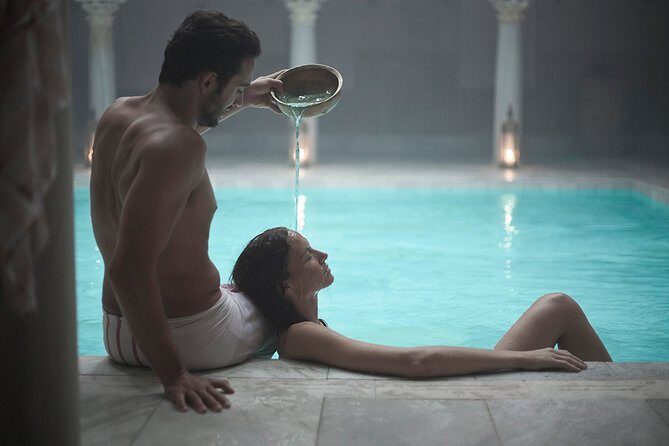
One of the tour’s most memorable technical stops is the Caliphal Baths, ancient Arab baths once used for relaxation and rejuvenation. The narration calls out architectural splendor, including arches and tilework.
This is where the audio makes the experience richer because baths aren’t only about looks; they’re about design. Even without a lecture, you start to notice shape, symmetry, and the way water-related spaces were planned.
If you tend to get rushed in museums, slow your pace here. This is the kind of location where the “why” is hiding in the details.
Castle of the Christian Monarchs: from Caliphal palace to later power
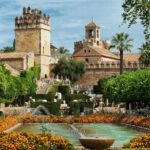
Then you reach the Castle of the Christian Monarchs, a fortress tied to the residence of Christian rulers. The audio links it to earlier origins as a Caliphal palace and later roles connected to the Spanish Inquisition.
This is a heavy topic, and the tour’s strength is that it doesn’t treat it like trivia. It helps you understand how one site can keep changing hands and meanings over time. As a walking tour, it also prevents that common problem where you see one era only in isolation.
Royal Stables: where Andalusian horses have mattered for centuries
You’ll pass by the Royal Stables, where Andalusian horses have been bred and trained for centuries. This stop adds a human-scale cultural element to the tour. Not everything in Córdoba is stone and tiles—some of it is living tradition and craftsmanship.
Even if you’re not a horse person, this is a good palate cleanser after architecture-heavy stops. It also helps you see how Córdoba valued discipline, training, and status through animal culture.
Bell Tower and the sound of the old center
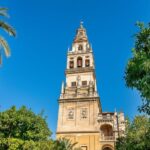
The tour includes a pass by the Bell Tower of Córdoba, described as an architectural masterpiece and a symbol of cultural heritage. The narration notes the melodious chimes that carry through the historic center.
This is another moment where “self-guided” works in your favor. You can pause, listen, and let the sound do part of the explaining for you.
Optional Archaeological Museum: only if you want more artifacts
There’s an optional stop at the Archaeological Museum. If you want more evidence of Roman, Islamic, and Christian heritage in one place, this can be a great extension.
If you’re already feeling full on history, you can skip it and protect your energy for the plazas later in the route.
Plaza del Potro, Plaza de la Corredera, and Plaza de las Tendillas
Toward the end, the tour transitions into squares—useful because plazas naturally reset your pace and give you a place to stand, breathe, and watch Córdoba happen around you.
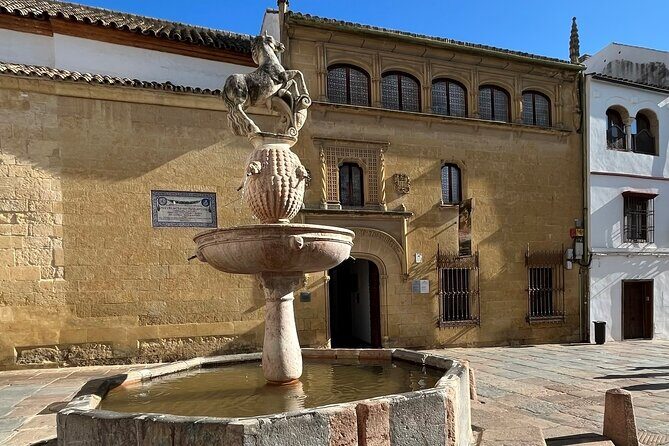
- Plaza del Potro is presented as an artistic and writer-inspired square with a lively feel.
- Plaza de la Corredera is described as one of the most iconic squares, with bustling energy and cafes/market vibe.
- Plaza de las Tendillas is tied to the commercial heart of the city, again a street-scene kind of stop.
These plaza sections are less about one building detail and more about getting the rhythm of Córdoba. They’re also helpful if you want to plan food nearby afterward—though food and drink are not included in the tour.
Mudéjar clue: Saint Bartholomew Chapel
You’ll pass by Saint Bartholomew Chapel, highlighted as an example of Mudéjar architecture blending Islamic and Christian influences. This is a short stop that acts like a “pattern recognition” moment.
When you’ve already walked through the Mosque-Cathedral and seen later Christian buildings, this chapel gives you another angle on how styles mixed. It’s a quick reminder that Córdoba’s story isn’t just in big monuments—it’s in smaller architectural choices, too.
How long it really takes (and how to pace it)
The listed duration is about 3 to 3.5 hours. That means you’ll likely move between stops at a steady walking pace, with short pauses for listening and photos.
My practical advice: choose your “photo strategy” before you start. If you’re taking lots of pictures, expect to stay on the longer end of the time window. If you keep it to a few moments per stop, you’ll fit comfortably within the 3-hour target.
Also, if you’re traveling in hot weather, use courtyards as your natural shade breaks. The route includes multiple courtyard and indoor-feeling stops like patios, the Orange Tree Courtyard, the baths, and Casa Andalusí, which can help you manage heat and tired legs.
What you actually get for $11.99
At $11.99 per person, this is not priced like a guided group tour with a live host. It’s priced like an audio tool that helps you get value out of the sights you’d otherwise see on your own.
Where the value shows up:
- Lifetime access to this English audio tour means you can reuse it later or revisit with fresh attention.
- Offline access for audio, maps, and geodata reduces stress.
- The route is structured with many stops, so you get a lot of Córdoba coverage in a single loop.
What to remember: you’ll still do the walking yourself, and you’ll need headphones. But for the price, the format is a strong fit if you want both guidance and freedom.
One thing to watch: starting mid-route and map switching
One real friction point comes from the app experience: if you try to start a couple sites into the tour, it can be hard to get going. Also, switching away from the map while taking a picture can trip you up.
So if this matters to you, don’t wait until you’re standing in the middle of a busy street to figure out how to jump ahead. Instead, plan to start from the beginning at Torre de la Calahorra, or set your route while you’re still at the meeting point.
Should you book this Córdoba audio walk?
I’d book it if you want a clear, history-focused route through Córdoba that mixes the big names (Mezquita-Cathedral, Roman Bridge area) with smaller, sensory stops (patios, Orange Tree Courtyard, Calleja de las Flores). It’s also a good pick if you like choosing your own pace, because the audio supports pausing and returning.
I might skip it if you only want a quick hits tour with minimal walking or if you strongly prefer a live guide who can answer questions on the spot. This is guidance through audio, not a conversation.
If you’re trying to make your first Córdoba visit feel organized without turning it into a checklist, this tour is a smart, cost-friendly way to do it.
FAQ
How long does the self-guided tour take?
The tour typically runs about 3 hours to 3 hours 30 minutes.
What is the price per person?
It costs $11.99 per person.
Where do I start, and where do I end?
You start at Torre de la CalahorraPuente Romano, Puente Romano, s/n, Sur, 14009 Córdoba, Spain. The activity ends back at the meeting point.
Is the tour available in English?
Yes, it’s offered in English.
Do I need a smartphone and headphones?
You’ll need your own smartphone and headphones. The tour provides an app, but it doesn’t include the phone or audio gear.
Does it work offline?
Yes. The app includes offline access to audio, maps, and geodata.
Is transportation included?
No, transportation is not included.
What times is the tour available?
The listed hours show it as available daily (Monday to Sunday) from 12:00 AM to 11:59 PM during the stated date range.
Is there free cancellation?
Yes, free cancellation is available. You can cancel up to 24 hours in advance for a full refund.
Does the tour help me get back on track if I wander?
It uses GPS navigation, and the audio route is designed to bring you back onto the path if you drift away.